 how-to
How to Choose Reliable Landscape Contractors: 7 Steps
Table of Contents
- Step 1: Define Your Project Scope and Budget Before You Call Anyone
- Step 2: How to Find Reliable Landscape Contractors Through Local Research
- Step 3: Questions to Ask a Landscape Contractor Before You Hire
- Step 4: How to Compare Landscaping Estimates Apples to Apples
- Step 5: What to Include in a Landscaping Contract Before Signing
- Step 6: Understanding Your Landscaping Project Timeline and Communication Plan
- Step 7: Red Flags That Signal Unreliable Landscape Contractors
- Frequently Asked Questions
Last Updated: October 17, 2026
Step 1: Define Your Project Scope and Budget Before You Call Anyone
Most people start calling landscape contractors before they know what they actually want. That's backward, and it costs money. A clear scope is the difference between three comparable bids and three numbers that might as well be in different languages.
Write down what the project includes: design, installation, hardscaping, softscaping, planting, irrigation, drainage, lawn care, or maintenance. Note the size of the area and any problem you want solved. Water pooling near the foundation is a drainage job, not a planting job, and mixing those up in your first call wastes everyone's time.
Then set a budget range. Pricing for landscape design and installation depends on materials, labor, site access, and project size, so any honest contractor will want to see the space before quoting. Scope creep is the norm in outdoor work once soil and grade get exposed.
- List every service you need in writing
- Measure the space, even roughly
- Photograph the problem areas
- Set a budget range, not a fixed cap
- Decide your must-haves versus nice-to-haves
Step 2: How to Find Reliable Landscape Contractors Through Local Research
Reliable landscape contractors come from three places: people you trust, your own research, and a short list you build deliberately. Start with neighbors, family, and friends who've had work done recently. Ask what went well and what didn't.
Then check online reviews and testimonials across more than one platform. Read the three-star reviews first; they tend to be specific and fair. Look at whether the landscaping company responds to criticism with facts or excuses.
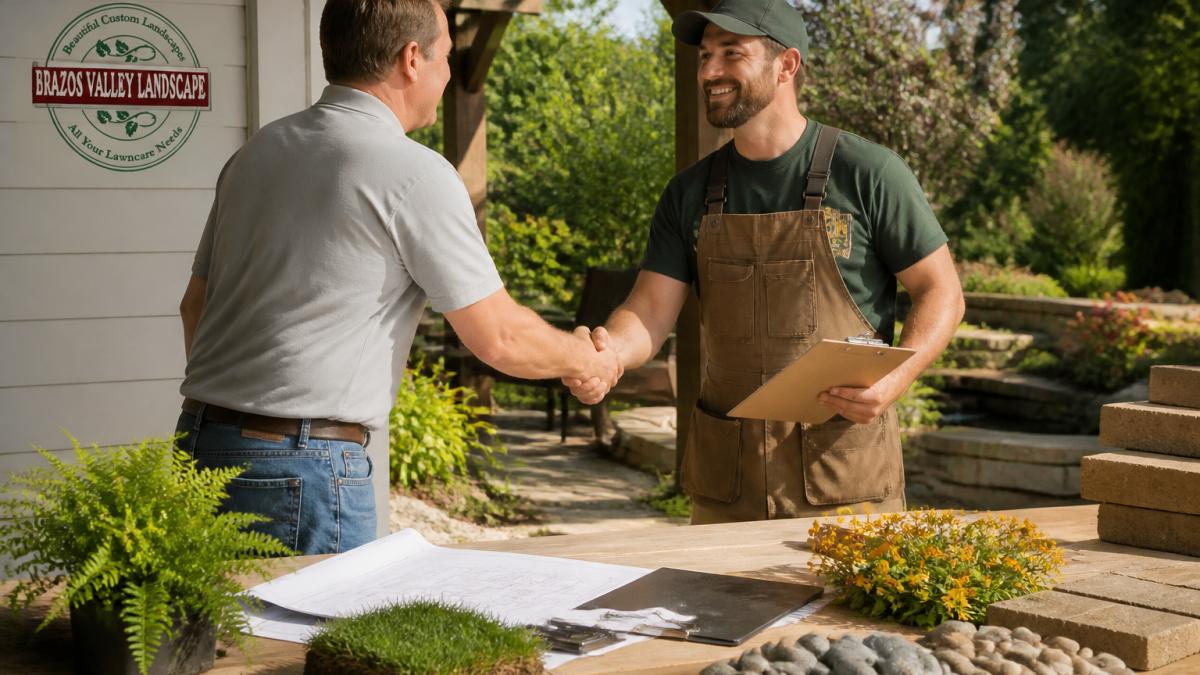
Next, review portfolios and examples of past projects. A solid portfolio shows before-and-after photos of landscape projects similar to yours. If you need hardscaping and outdoor living structures, look for those specifically, not just flower beds.
Finally, ask each candidate for references from projects completed in the last year. Call them. Two questions matter most: did the crew finish on schedule, and would you hire them again?
Step 3: Questions to Ask a Landscape Contractor Before You Hire
The right questions to ask a landscape contractor separate serious operators from salespeople. Ask them on the phone before anyone visits your property, and ask for documentation in writing so you can verify the answers rather than take them on faith.
Licensing and registration
- Are you licensed or registered for home improvement work in this state, and what is your license or registration number?
- Can you email a copy of the license or a screenshot of your active status in the state database?
Most states that regulate home improvement contractors publish a searchable license lookup, often through the state licensing board or the office of the attorney general. Ask for the number, then look it up yourself.
Insurance
- Can you send a certificate of insurance for general liability and, if you have employees, workers' compensation?
- Who is the insurance carrier, and what are the policy limits and expiration dates?
Ask for the certificate to be sent directly from the insurance agent or carrier, not forwarded as a PDF the contractor edited. Then call the number on the certificate and confirm the policy is current and the limits are what you were told.
Experience and project fit
- How long have you worked in this area, and how many projects like mine have you completed in the last year?
- Who will actually be on site, and is that your crew or a subcontractor?
- Can you provide three references from projects completed in the last twelve months, with phone numbers?
Call the references. Ask whether the crew finished on schedule, whether the final invoice matched the estimate, and whether they would hire the contractor again. Ask specifically about punch-list items and cleanup, because that is where reliability shows.
Scope, changes, and warranty
- How do you handle changes once work starts, and will change orders be priced and approved in writing before the work is done?
- What is your warranty on plants, hardscaping, and labor, and how long does each last?
- Can you provide a written estimate and a written agreement before any deposit is paid?
Listen for specifics. For background on what consumer protections apply to home improvement work in your state, check your state attorney general's consumer resources, such as the consumer protection guidance from state attorneys general.
Step 4: How to Compare Landscaping Estimates Apples to Apples
Comparing bids line by line is the only fair way to compare landscaping estimates. A low total often means something was left out, not that the contractor is generous.
Ask every bidder to use the same categories. Send each contractor a short written request: break the estimate into design, site preparation and grading, hardscaping, softscaping and planting, irrigation, drainage, labor, equipment, disposal, permits, and contingency. Ask them to name materials by brand, model, and quantity where it matters, and to state what is excluded.
Compare the six things that actually drive the price.
- Labor: Is the crew the contractor's own employees or subcontractors? Are hours estimated or fixed? A bid with no labor breakdown is hard to compare against one that itemizes it.
- Materials: Are plants, stone, pavers, and soil specified by brand and grade, or described generically? Generic specifications let a contractor substitute cheaper materials later.
- Site preparation: Does the bid include demolition, hauling away old material, grading, and soil amendment? These are commonly excluded to make a bid look lower.
- Exclusions: Look for the words "not included," "by others," and "allowance." An allowance is a placeholder number that can rise later.
- Payment schedule: Compare when money is due. Milestone-based payments tied to completed work are safer than a large upfront deposit.
- Change orders: Ask how extra work is priced and approved. A written change-order process protects both sides.
Then build a comparison:
| Line Item | Bidder A | Bidder B | Bidder C |
|---|---|---|---|
| Design fee | Included | Separate line | Included |
| Site prep and haul-away | Included | Excluded | Included |
| Materials specified | Yes, by brand | Generic | Yes, by brand |
| Labor breakdown | Yes | No | Yes |
| Drainage work | Excluded | Included | Included |
| Irrigation | Separate quote | Included | Separate quote |
| Warranty terms | 1 year labor | Not stated | 1 year labor, 90 days plants |
| Payment schedule | 50/50 | Half up front | Milestone-based |
| Change order process | Written | Verbal | Written |
Normalize the totals before you judge them. Add back anything a bidder excluded but you still need, and subtract anything a bidder included that you do not want. A bid that looks 15% lower often closes the gap once haul-away, grading, or irrigation is added back.
Red flags in an estimate: no written scope, no materials named, an unusually low price with no explanation, vague allowances, or pressure to sign today. If a bidder will not put the scope and exclusions in writing, you cannot compare the bid, and you should not sign it.
Step 5: What to Include in a Landscaping Contract Before Signing
A landscaping contract should spell out the project scope, materials, schedule, payment terms, warranty, and how disputes get handled. If any of those are missing, don't sign.
Here's what to check:
- Written scope matching the approved estimate, including what's excluded
- Materials and quantities, named specifically where it matters
- Payment terms tied to milestones, not one large upfront payment
- Start and completion dates, with weather allowances stated
- Change order process in writing before extra work begins
- Warranty covering plants, hardscaping, and workmanship separately
- Dispute resolution and who holds responsibility for permits
Many states require home improvement contracts to include specific disclosures and cancellation rights. The FTC guidance on home improvement scams and contracts is a useful starting point for what a fair agreement should contain.
Step 6: Understanding Your Landscaping Project Timeline and Communication Plan
A landscaping project timeline depends on scope, weather, material lead times, and permitting. Nobody can promise an exact date months out, and anyone who does is guessing.
Ask for a phase-by-phase schedule instead: design approval, site prep, hardscaping, irrigation and drainage, planting, and final walkthrough. For each phase, ask how long it typically takes and what could delay it.
Communication is the other half. Ask who your point of contact is, how often you'll get updates, and how quickly you should expect a reply.
- Confirm the daily start and end times
- Ask how change requests get approved
- Get the update cadence in writing
- Know who to call after hours for emergencies
- Schedule a final walkthrough before final payment
Step 7: Red Flags That Signal Unreliable Landscape Contractors
Unreliable landscape contractors share recognizable patterns. Spot them before money changes hands.
- Cash-only demands or pressure for a large deposit
- No written estimate, or an estimate with no scope
- No proof of licensing or insurance when asked
- Door-to-door pitches after storms offering leftover materials
- An unusually low price that undercuts every other bid
- No local address or references you can actually reach
- Reluctance to put warranty terms in writing
- High-pressure urgency, like "this price is only good today"
One flag alone might be nothing. Two or three together means walk away, even if the price is tempting. Scam operators count on urgency and flattery to override your judgment. Verifying licensing and insurance through your state's licensing board takes ten minutes and settles the question.
Frequently Asked Questions
What questions should I ask a landscape contractor before hiring?
Ask about their experience with projects like yours, whether they are licensed and insured, how they handle communication and change orders, who will be on site daily, and what their warranty covers. Request a written estimate with a clear scope of work, materials list, and payment schedule. Also ask for three recent local references you can call. A reliable landscape contractor will answer these questions directly and provide documentation without hesitation.
How can I compare landscaping estimates fairly?
To compare landscaping estimates fairly, make sure each bid covers the same scope: same plant sizes, same hardscape materials, same drainage solutions, and same labor inclusions. Ask each contractor to break costs into materials, labor, permits, and disposal. Look beyond the total price and check what is excluded. A low bid that omits soil prep or irrigation will cost more later. Compare at least three written estimates side by side.
What should a landscaping contract include?
A landscaping contract should include the full project scope, a materials list with quantities and brands, start and completion dates, payment terms tied to milestones, warranty details, change order procedures, and a dispute resolution clause. It should also name who is responsible for permits and cleanup. Read every line before signing, and never accept a contract that lacks a written scope or payment schedule.
How long does a typical landscaping project take from start to finish?
A landscaping project timeline depends on scope. A simple planting and sod refresh can take one to two weeks. A full design with hardscaping, irrigation, and lighting often runs four to eight weeks. Weather, permit approvals, and material lead times can add days. Ask your contractor for a written schedule with milestones, and confirm how they handle rain delays. A reliable contractor will give you a realistic timeline, not an unrealistically fast one.
Choosing reliable landscape contractors comes down to preparation and verification, not luck. At Brazos Valley Landscape, Inc., we've built our work around comprehensive landscaping and hardscaping services, customized outdoor living solutions, and cost-effective designs that hold up over time. If you want a team that puts the scope, schedule, and warranty in writing before the first shovel hits the ground, contact us and let's talk about your project.