 how-to
How to Hire a Landscape Designer in College Station
Table of Contents
- What to Expect When You Hire a Landscape Designer in College Station
- Step-by-Step: How to Hire a Landscape Designer
- Why Local Expertise Matters: Soil Testing for Residential Landscaping
- Choosing Low Maintenance Landscaping Plants for Brazos Valley Yards
- Deer Resistant Plants for Landscaping in High-Population Areas
- Understanding Costs: Hourly Rates, Turnkey vs. Consultation-Only
- Frequently Asked Questions
Last Updated: October 3, 2026
What to Expect When You Hire a Landscape Designer in College Station
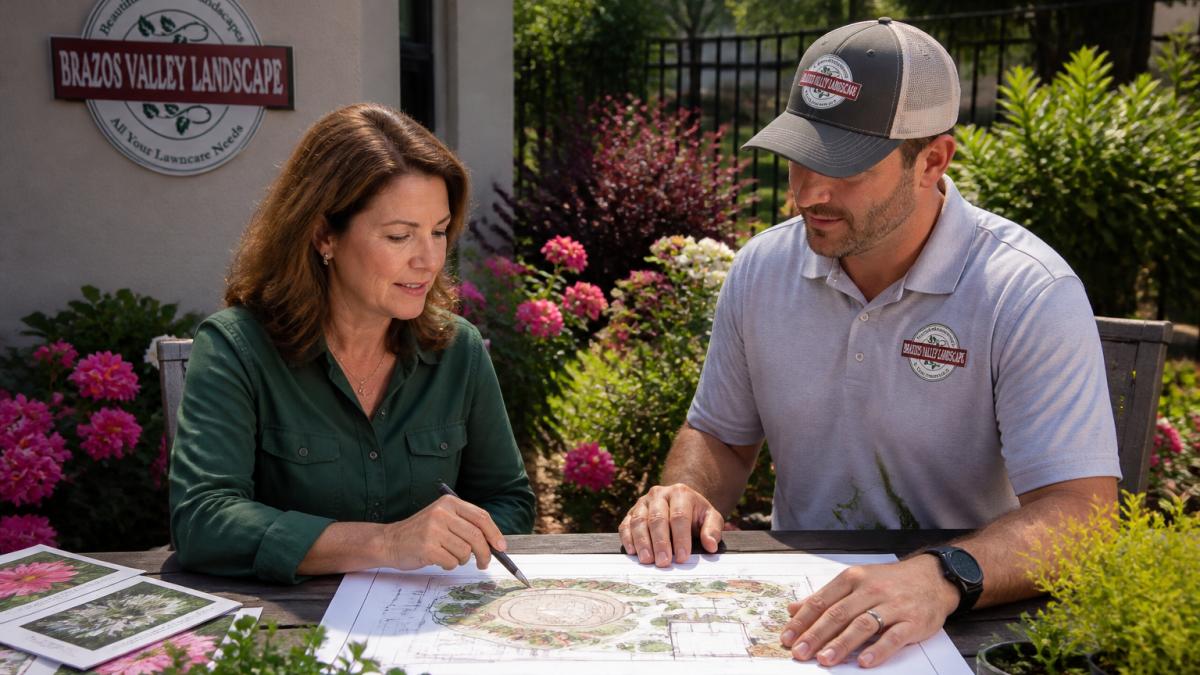
When you hire landscape designer College Station homeowners trust, you get a plan built for this specific climate, soil, and wildlife, not a template pulled from a national catalog. The process should start with a site walk, a real conversation about how you use your yard, and a written scope before anyone orders a single plant. Below, we break down exactly how to hire landscape designer help that fits your property, your budget, and your timeline.
Most homeowners come to us with the same worry: how do I tell a good designer from a smooth talker? The answer is simpler than you'd think.
A landscape designer is a professional who plans the layout, plant selection, and hardscape elements of an outdoor space, focusing on aesthetics, function, and how the yard will be used day to day. A landscape architect goes further, holding a state license to stamp construction documents for structural work like retaining walls, grading, and drainage engineering.
That distinction matters more than most guides admit. For a typical residential yard, a designer is often the right fit. For a project involving significant grading, structural retaining walls, or commercial site work, you may need a licensed architect. Many firms handle both design and installation, so you're not juggling multiple contractors.
| Project Type | Best Fit | Why |
|---|---|---|
| Planting beds, sod, mulch refresh | Landscape designer | No structural permits needed |
| Patio, walkway, outdoor kitchen | Designer with hardscape experience | Focus on layout and materials |
| Retaining walls, major grading | Licensed landscape architect | Structural and drainage liability |
| Commercial site, parking, drainage | Landscape architect | Code and permit requirements |
Step-by-Step: How to Hire a Landscape Designer
The hiring process works best when you treat it like any other professional service: define the job, verify the credentials, then check the references. Here's the workflow we recommend.
Step 1: Define Your Project Scope and Budget
Write down what you actually want before you call anyone. A new front bed is a different project than a full backyard transformation with an outdoor kitchen. Knowing your scope keeps the conversation honest and prevents scope creep later.
Set a realistic budget range, then tell the designer what it is. A good designer will tell you what's achievable at that number instead of quietly cutting corners.
Step 2: Vet Credentials and Review Portfolios
Look for professional credentials, insurance, and a portfolio of completed projects you can actually visit or view in photos. Ask to see work that's at least two years old. Anyone can photograph a fresh install, but a yard that still looks good after two Texas summers tells the real story.
Step 3: Ask the Right Questions and Check References
Call two or three past clients and ask whether the designer showed up when promised, stayed on budget, and handled problems without disappearing. That last question matters, because a contractor who vanishes mid-project is the number one complaint we hear.
Why Local Expertise Matters: Soil Testing for Residential Landscaping
Soil testing for residential landscaping is the step that separates a design that thrives from one that struggles. In the Bryan and College Station area, three conditions stack against a generic plant list: the municipal and irrigation water carries high sodium content, the native soil is heavy clay, and the soil pH runs alkaline rather than acidic. Each one changes what a designer should specify.
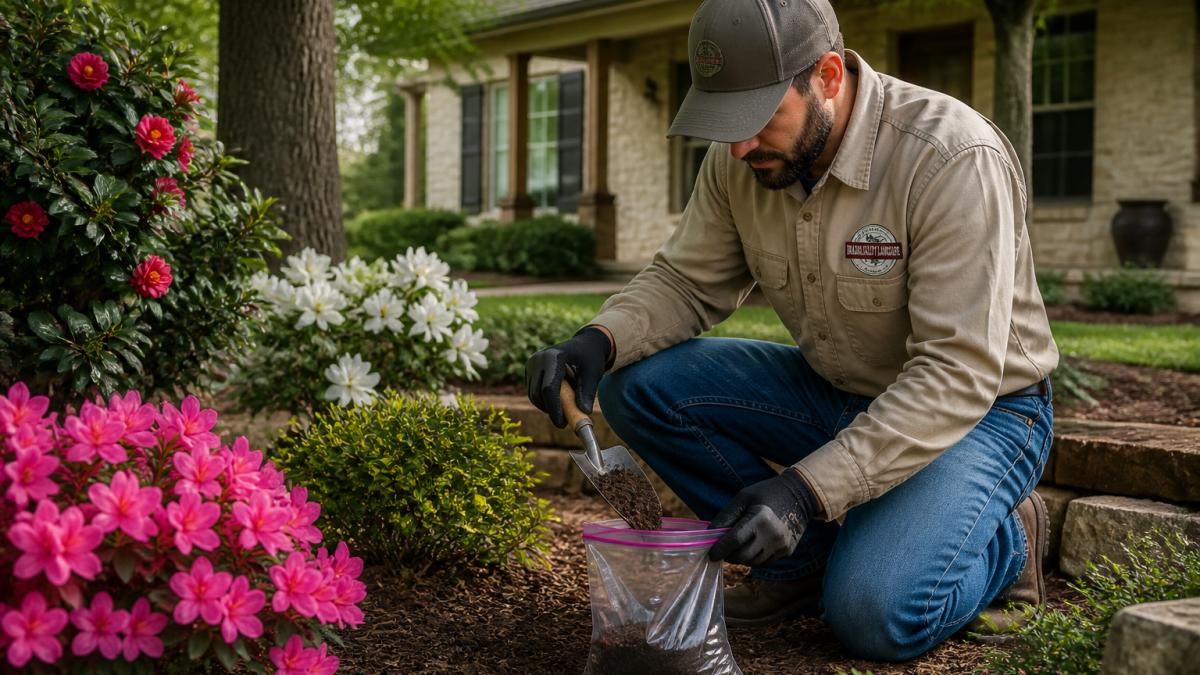
Here is what each condition actually does to a yard:
- High-sodium water. Sodium accumulates in the root zone over years of irrigation, degrading soil structure and interfering with how roots take up water and nutrients. Plants that look fine the first season can decline by the third.
- Heavy clay soil. Clay drains slowly and compacts easily. Roots suffocate in saturated pockets, and water that can't percolate pools against foundations and in low spots.
- Alkaline, low-acidity soil. Many popular ornamentals are acid-lovers. In alkaline clay they develop iron chlorosis, yellow leaves with green veins, and never reach their advertised size or bloom.
That combination rules out a long list of plants that look great in a catalog but fail here. Azaleas, camellias, barberries, and gardenias are a few of the plants that simply don't perform well in this area without major soil amendment, and even then they often disappoint. A designer who knows the region will steer you toward species that match the actual chemistry of your yard instead of asking you to fight it.
Wildlife adds another layer that a generic guide never addresses. Certain subdivisions and rural pockets carry a high deer population, and that single fact dictates which plant material you can use. Deer pressure is not uniform, it changes block by block and season by season, and it intensifies as nearby development pushes animals into established neighborhoods. A designer who doesn't know the deer pressure on your street will plant a buffet. One who does will choose species with strong scent, fuzzy or tough foliage, and growth habits that tolerate browsing, then group them so the most vulnerable plantings sit closest to the house.
This is why the site walk matters more than the plant catalog. A designer should read your soil, your water source, your sun exposure, and the wildlife traffic on your specific lot before recommending a single species. Ask any designer you interview how they handle drainage and soil chemistry before they ever mention plants.
Choosing Low Maintenance Landscaping Plants for Brazos Valley Yards
Low maintenance landscaping plants are the ones that match the local soil, sun, and rainfall instead of fighting them. In this region, that means species that tolerate alkaline clay, handle high-sodium irrigation water, and shrug off deer pressure, a combination most national plant lists ignore entirely.
A designer building a low-maintenance plan here typically works from a short list of proven performers:
- Tough, adapted shrubs such as yaupon holly, dwarf yaupon, Texas sage (cenizo), abelia, and dwarf glossy abelia that handle alkaline clay and reflected heat.
- Ornamental grasses like muhly grass, gulf muhly, and inland sea oats that add movement and texture without demanding rich soil.
- Drought-tolerant perennials such as lantana, salvia, and black-eyed Susan that establish and then largely fend for themselves.
- Durable groundcovers like Asian jasmine in shaded areas or liriope along bed edges that crowd out weeds without constant hand-weeding.
- Shade and structure trees such as live oak, cedar elm, and crape myrtle that suit the local climate and, once established, need little supplemental water.
What makes these choices low maintenance is not that they never need care, it's that they don't require the homeowner to constantly amend soil, replace failed plants, or replant after deer browse. A yard full of acid-loving ornamentals in alkaline clay is high maintenance by definition, no matter how carefully it's installed.
The real difference between a low-maintenance yard and a high-maintenance one comes down to plant selection at the design stage. Get that right and your weekends stay free. Get it wrong and you'll spend them watering, amending, and replacing.
Deer Resistant Plants for Landscaping in High-Population Areas
Deer resistant plants for landscaping are not a guarantee, but they shift the odds heavily in your favor. No plant is truly deer-proof, especially when food is scarce, but some are far less appetizing than others.
In areas with heavy deer traffic, designers lean on plants with strong scent, fuzzy texture, or tough foliage that deer tend to avoid. The key is knowing which subdivisions and outlying areas carry that pressure, because deer density changes block by block.
This is where local knowledge beats a generic plant list every time. A designer who works these neighborhoods daily knows which streets get hit hardest and can plan accordingly.
Understanding Costs: Hourly Rates, Turnkey vs. Consultation-Only
Pricing for landscape design depends on the scope, the site conditions, and whether you want a plan only or a full turnkey approach. Because every yard is different, we recommend contacting us for a personalized quote rather than publishing flat rates that wouldn't reflect your property.
Two common models exist:
| Service Model | What You Get | Best For |
|---|---|---|
| Consultation-only | Design plan, plant list, and guidance you install yourself | DIY homeowners with time |
| Turnkey design-build | Design, materials, installation, and project management | Owners who want it done right |
If you're planning a project and want a real number, the fastest path is to contact us for a site visit and a written estimate. Texas A&M AgriLife Extension Service publishes regional guidance on soil and plant selection that can help you prepare questions before that visit.
Frequently Asked Questions
What is the difference between a landscape designer and a landscape architect?
Landscape architects hold state licenses and are trained to handle complex site engineering, grading, and structural elements. Landscape designers focus on plant selection, hardscape layout, and aesthetic planning. For most residential projects in College Station, a designer with strong local plant knowledge covers everything you need. If your project involves major grading or retaining walls, you may need an architect.
How much does a landscape designer charge per hour?
Hourly rates vary based on the designer's experience, project complexity, and whether you need a full master plan or a consultation-only session. Some designers charge a flat fee for a design package. Ask each designer you interview for a written estimate that breaks down design time, site analysis, and revision rounds before you commit.
Why is soil quality important when choosing plants for a landscape design?
Brazos Valley soil tends to be heavy clay with high sodium content in the water and low acidity. Azaleas, camellias, barberries, and gardenias struggle in these conditions without significant soil amendment. A designer who tests your soil first will recommend plants that actually thrive here, saving you from replacing dead shrubs every season.
How do I find a landscape designer familiar with local deer populations?
Ask whether the designer has worked in your specific subdivision or nearby areas with known deer pressure. A designer familiar with local wildlife will know which plants deer browse and which they leave alone. Request a plant list from a past project in a similar area and ask what replacements were needed after the first year.
Hiring the right designer comes down to one thing: finding someone who knows this specific ground, water, and wildlife. Brazos Valley Landscape, Inc. brings that local knowledge to every project, from custom landscape design and installation to outdoor living structures, kitchens, and swimming pools. We handle design, installation, and communication so you're never chasing updates. Contact us to turn your outdoor vision into reality.