 ultimate-guide
Hiring a Professional Landscape Design Firm: 2026 Guide
Table of Contents
- What a Professional Landscape Design Firm Actually Does
- Questions to Ask a Landscape Designer Before You Sign
- Your Landscape Design Consultation Checklist
- What a Landscape Design Proposal Should Include
- The Landscape Design and Installation Process, Step by Step
- Credentials, Licensing, Insurance, and References
- How to Compare Landscape Design Firms Side by Side
- Frequently Asked Questions
Last Updated: October 10, 2026
What a Professional Landscape Design Firm Actually Does
Hiring a professional landscape design firm is the difference between a yard that looks planted and an outdoor space that works as a system. A landscape design firm plans, documents, and typically installs outdoor improvements, from site analysis and planting plans to hardscape, irrigation, and outdoor living structures. Brazos Valley Landscape, Inc. handles the entire arc: design, installation, and construction of outdoor living areas, kitchens, and pools.
The scope is broader than most homeowners expect. A firm studies how water moves across your lot, where sun falls, how you use the space, and what your budget can deliver. Design-build firms then carry that plan through construction, removing the handoff gaps that cause delays.
Designer vs. Architect vs. Design-Build Firm
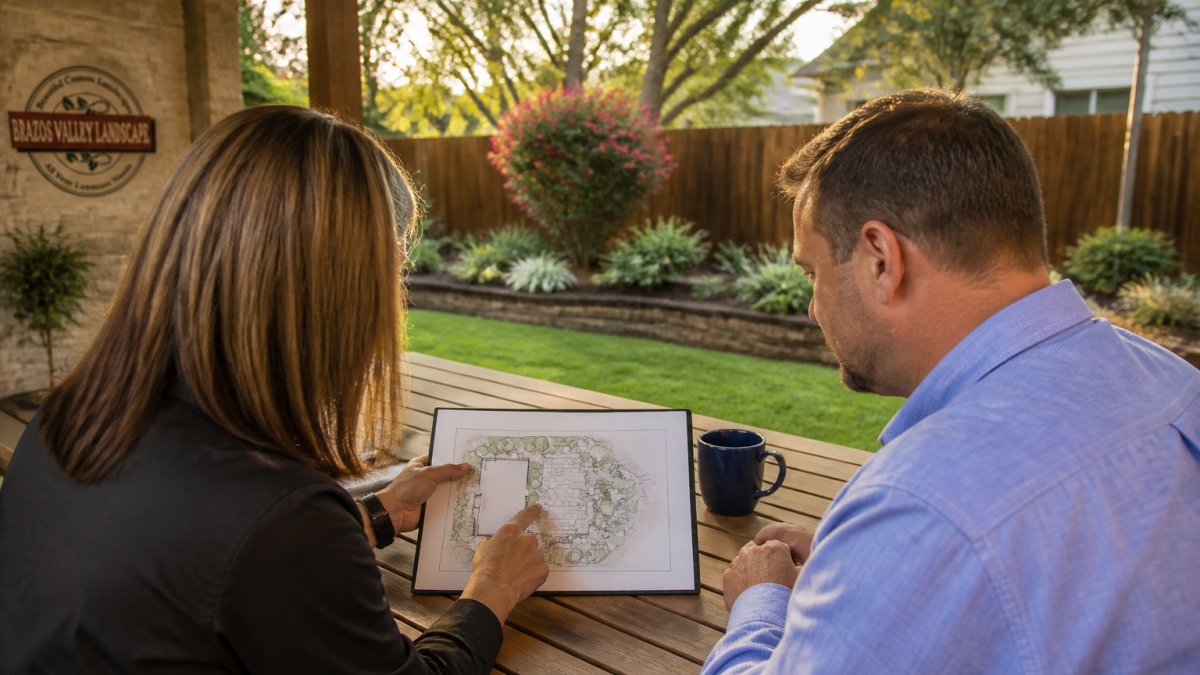
Three roles get used interchangeably, and they are not the same. A landscape designer typically holds a horticulture or design degree and focuses on planting, materials, and residential layouts. A landscape architect is state-licensed, which matters most on commercial design, grading, and stamped construction documents. A design-build firm combines the design team and construction crew under one contract.
For most residential projects, a design-build firm is the practical choice: one point of accountability instead of a designer who hands you drawings and a separate contractor who interprets them. The trade-off is that you should verify the firm's construction credentials, not just its portfolio.
Questions to Ask a Landscape Designer Before You Sign
The best questions to ask a landscape designer expose how the firm handles money, timelines, and change orders before you are committed. Ask them in the interview, not after signing.
Start here:
- Who is my single point of contact during construction?
- What happens if we discover drainage or utility problems mid-project?
- How are change orders priced and approved?
- Which parts of the work are subcontracted?
- Can I see a completed project from the last 12 months?
That last question separates firms with real recent work from firms with a portfolio of photos from a decade ago. The Federal Trade Commission guidance on home improvement and contractor claims is a useful reference for what a contractor can and cannot legally promise you.
Red Flags in the Interview
Vague answers about permits. No written scope. Pressure to sign the same day. A large deposit before any design work. Any of these should slow you down.
Your Landscape Design Consultation Checklist
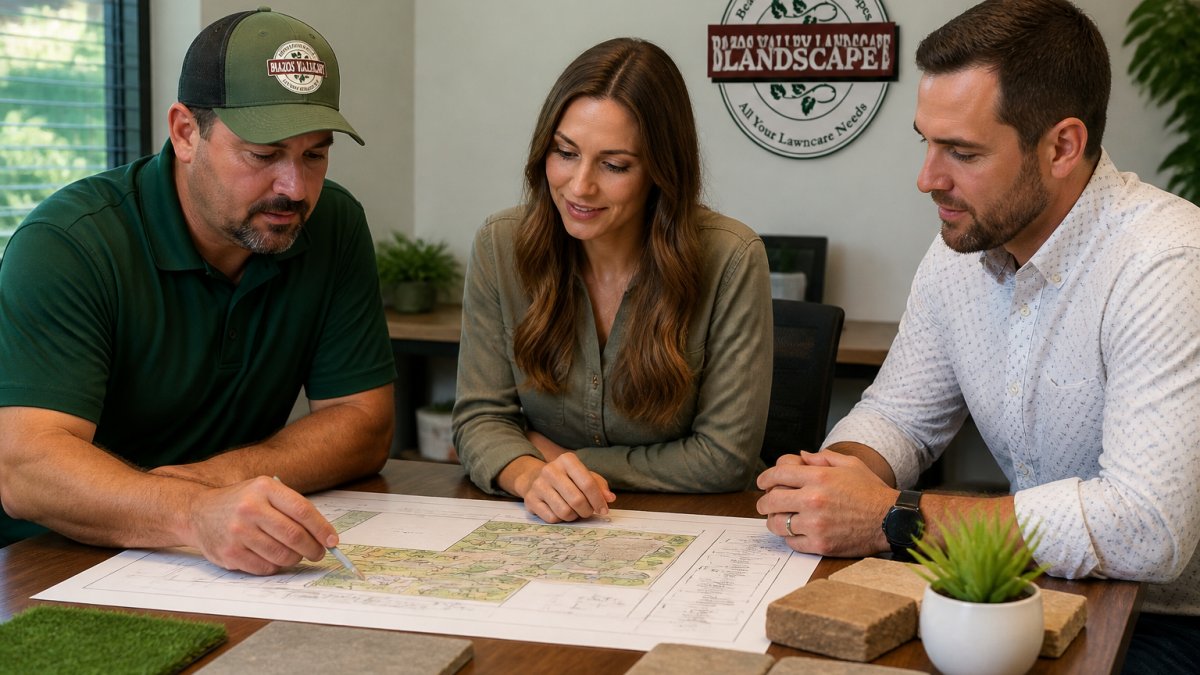
A landscape design consultation checklist keeps the first meeting productive. Bring:
- A rough budget range, including a contingency for surprises
- Photos of your yard from multiple angles at different times of day
- A list of how you want to use the space: entertaining, play, pets, quiet seating
- Any known drainage, erosion, or standing-water problems
- Your HOA rules or deed restrictions, if applicable
- A target completion date, especially if you are preparing to sell
Drainage is the item homeowners most often leave off the list, and it quietly ruins finished projects. Water that pools after rain does not fix itself when new planting goes in. A firm should assess grading and drainage during site analysis, not after the patio is poured.
What a Landscape Design Proposal Should Include
A landscape design proposal should state deliverables, fees, timeline, and exclusions in writing. If any of those four is missing, you are looking at a sales document, not a proposal.
A complete proposal typically contains:
- A written scope of work, broken into phases
- Concept design and site analysis findings
- A plant and materials list with sizes
- Construction documents if hardscape or structures are involved
- A project timeline with milestones
- A fee structure and payment schedule
- Exclusions and assumptions
The exclusions section is where you learn the truth. Firms that list what they are not covering usually communicate well during construction.
Fee Structures: Hourly, Flat Fee, or Percentage
Design fees generally follow one of three models, and each shifts risk differently.
| Fee Structure | How It Works | Best For | Watch Out For |
|---|---|---|---|
| Hourly rate | You pay for design time as it is spent | Small scopes, single-area redesigns | Open-ended cost if scope drifts |
| Flat fee | One price for a defined design package | Clearly scoped residential projects | Rigid; changes trigger new fees |
| Percentage of project | Fee calculated as a share of construction cost | Larger design-build projects | Incentive to inflate the build |
Pricing depends on site conditions, materials, and scope, so request a written quote rather than a general figure. Ask each firm to explain which model it uses and why.
The Landscape Design and Installation Process, Step by Step
The landscape design and installation process follows a predictable sequence, and knowing it helps you spot a firm that skips steps:
- Consultation and site analysis. The firm walks the property, checks grading, drainage, sun exposure, and existing plantings.
- Concept design. You review preliminary layouts and react to them before anything is finalized.
- Design development. Materials, plant selections, and dimensions are locked in.
- Construction documents. Detailed drawings and specifications guide the build.
- Contractor selection or handoff. In design-build, the same team moves straight into construction.
- Installation. Hardscape, irrigation, planting, and structures go in on a sequenced schedule.
- Walkthrough and warranty. You review the finished work against the plan and confirm what is covered afterward.
Credentials, Licensing, Insurance, and References
Credentials separate a professional landscape design firm from a crew with a truck. Requirements vary by state and work type, so confirm what applies to your project.
Licensing. Landscape architecture is licensed at the state level, typically tied to a named individual, not the company. Ask for the license number and the name it is issued to, then look it up in your state's licensing database.
Insurance. Request a certificate of general liability and workers' compensation coverage, and confirm it is active for the project dates. Two details matter.
References. Ask for two or three recent clients you can call, ideally with projects similar in size and scope. Skip "were you happy?" and ask instead: How did the firm handle a change order?
Portfolio. Look for completed work with dates, not just renderings. A rendering shows what a firm can imagine; a dated photograph shows what it can deliver. Ask to see a project at least a year old to judge how plantings and hardscape have held up.
Years of experience and team. Ask who will be on site and how long the firm has operated. The relevant question is not how long the firm has existed but how long your specific crew has worked together.
One more step most homeowners skip: ask who will pull the permits. In many jurisdictions the permit applicant must hold the relevant license, and a vague answer may mean the firm plans to have you pull the permit in your own name, shifting code-compliance liability onto you. Settle this before you sign anything.
How to Compare Landscape Design Firms Side by Side
Comparing firms on price alone is the most common mistake homeowners make. Two bids identical on the bottom line can differ enormously in what is included, who does the work, and what happens when something goes wrong.
Build a scope sheet from your own priorities, not any firm's proposal. List every element, planting beds, hardscape, irrigation, lighting, structures, and mark each essential or optional. Ask each firm to price against that sheet.
Once the scopes line up, score each firm on the same criteria so the comparison is fair:
| Criteria | What to Look For | Weight |
|---|---|---|
| Scope clarity | Written deliverables and exclusions | High |
| Communication | Named contact and update cadence | High |
| Credentials | License, insurance, references | High |
| Design fit | Portfolio matches your style and budget | Medium |
| Timeline | Written schedule with milestones | Medium |
| Price | Total project cost and fee model | Medium |
What most guides miss is that the cheapest bid often wins on price and loses on change orders.
Also compare payment schedules. A schedule tied to milestones, design completion, permit approval, rough-in, final walkthrough, keeps the firm's incentive aligned with progress. A schedule that front-loads a large deposit before any design work shifts risk onto you.
Finally, compare exclusions side by side. Lay the proposals next to each other and list every exclusion across all of them. The firm that excludes the fewest items is not automatically best, but a firm that excludes items the others include is telling you where its price advantage comes from.
Brazos Valley Landscape, Inc. serves homeowners and commercial property managers across the greater College Station, Bryan, Navasota, Brenham, and Hempstead areas, handling design, installation, outdoor living structures, kitchens, and pools under one team.
Frequently Asked Questions
What does a professional landscape design firm do?
A landscape design firm handles site analysis, concept design, construction documents, and often installation. The team measures your property, studies sun and drainage patterns, and produces a design plan showing plantings, hardscape, and outdoor structures. Some firms stop at the design phase; others, like design-build companies, carry the project through construction. Ask upfront which stages the firm covers so you know whether you'll need a separate contractor for installation.
What questions should I ask a landscape designer before hiring?
Ask how many years of experience the designer has with projects like yours, whether the firm carries liability and workers' compensation insurance, and who will supervise the crew on site. Request two or three local references from projects completed in the last year, and ask how the firm handles changes once construction starts. Also confirm who owns the design drawings and whether the firm charges for the initial consultation.
How much does it cost to hire a landscape design firm?
Pricing depends on the size of your property, the complexity of the design, and whether you want design only or design plus installation. Firms may charge an hourly rate, a flat project fee, or a percentage of the construction budget. Because every yard is different, the reliable way to get a real number is to request a written proposal after a site visit. Contact the firm directly for current pricing.
What should I prepare before meeting with a landscape designer?
Bring a rough budget range, photos of yards and features you like, and a list of how you want to use the space, such as entertaining, play areas, or low-maintenance planting. Note any drainage problems, problem areas, or existing structures you want to keep. Measure your lot if you have the plat or survey handy. The more specific your goals, the more accurate the first proposal will be.
How long does a landscape design and installation project take?
Timelines vary with project scope. A design-only plan for a typical residential yard may take a few weeks from site analysis to final drawings. Full installation adds time for permitting, material ordering, and construction, and larger projects with pools or outdoor kitchens run longer. Ask for a written schedule with milestones, and confirm how weather and material lead times are handled.
Should I hire a landscape designer or a landscape architect?
Landscape architects hold state licensure and are typically required for projects involving structural elements, grading, or commercial site planning. Landscape designers handle residential planting plans, hardscape layouts, and outdoor living areas without that licensure. For most homeowner projects, a designer with strong local experience is sufficient. If your project involves retaining walls, drainage engineering, or commercial property, ask whether the firm works with a licensed architect.
Hiring well comes down to verification: scope in writing, credentials confirmed, and a firm that answers hard questions before you sign rather than after. Brazos Valley Landscape, Inc. brings comprehensive landscaping and hardscaping services, customized outdoor living solutions, and cost-effective design and installation to properties across the Brazos Valley. Get started with Brazos Valley Landscape, Inc. and turn your outdoor vision into a finished space.