 blog
blog
Best Hardscaping Materials for Patios: 2026 Guide
Table of Contents
- Comparing the Best Hardscaping Materials for Patios
- Quick Comparison: Patio Materials at a Glance
- Concrete Pavers and Brick: The Workhorse Options
- Patio Pavers vs Stamped Concrete: Which Holds Up Better?
- Natural Stone Patio Pros and Cons
- Least Expensive Patio Materials That Still Look Good
- What Paver Patio Cost Actually Includes
- Climate, Drainage, and Slip Resistance in the Brazos Valley
- Frequently Asked Questions
Last Updated: October 7, 2026
Comparing the Best Hardscaping Materials for Patios
Choosing the best hardscaping materials for patios comes down to three variables: how the surface handles your climate, how much maintenance you'll tolerate, and what the project does to your resale value. The American Society of Civil Engineers' infrastructure report card has repeatedly flagged how much of the built environment depends on durable, well-drained surfaces, and a patio is no different.
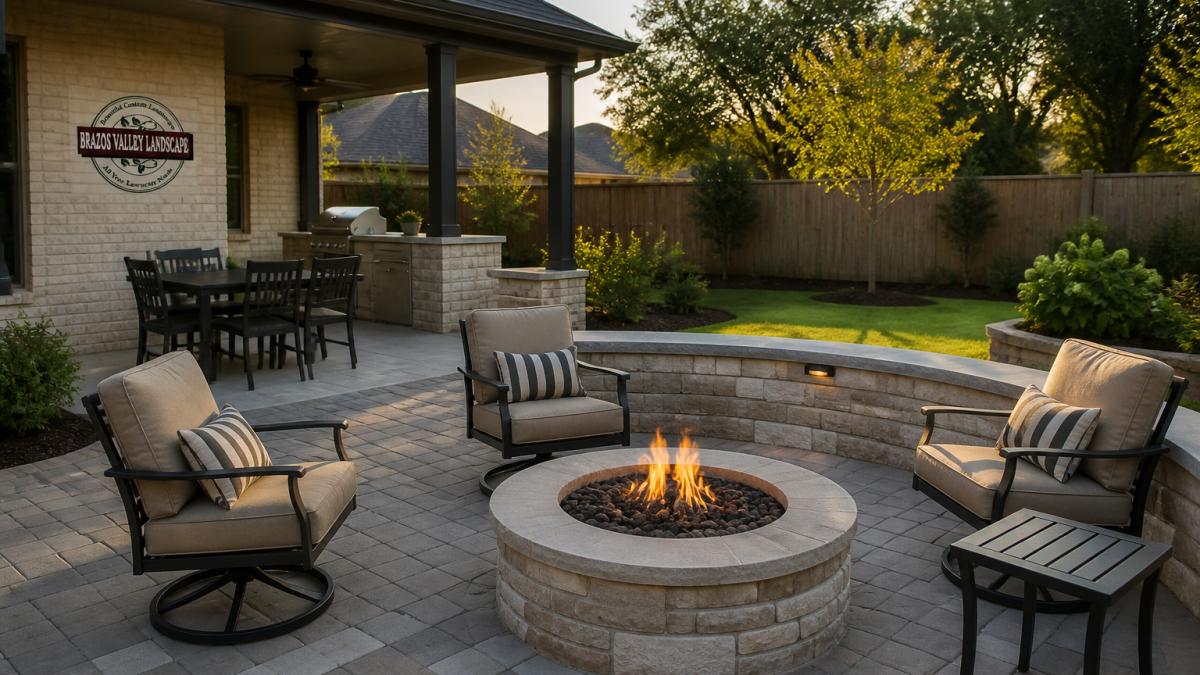
Hardscaping materials are the non-plant surfaces that define an outdoor living space: pavers, poured slabs, natural stone, retaining wall blocks, and the base layers beneath them. Get the material wrong and you'll be repairing it within a few seasons.
Quick Comparison: Patio Materials at a Glance
Here's how the main options stack up before we get into the detail.
| Material | Appearance | Durability | Maintenance | Best For |
|---|---|---|---|---|
| Concrete pavers | Uniform, many colors | High, repairable | Low | Most patios |
| Clay brick | Classic, warm tones | High | Low | Traditional designs |
| Stamped concrete | Mimics stone | Moderate | Medium | Large flat areas |
| Flagstone | Irregular, natural | High | Medium | Rustic character |
| Travertine | Smooth, pale | High | Low | Pool decks |
Concrete Pavers and Brick: The Workhorse Options
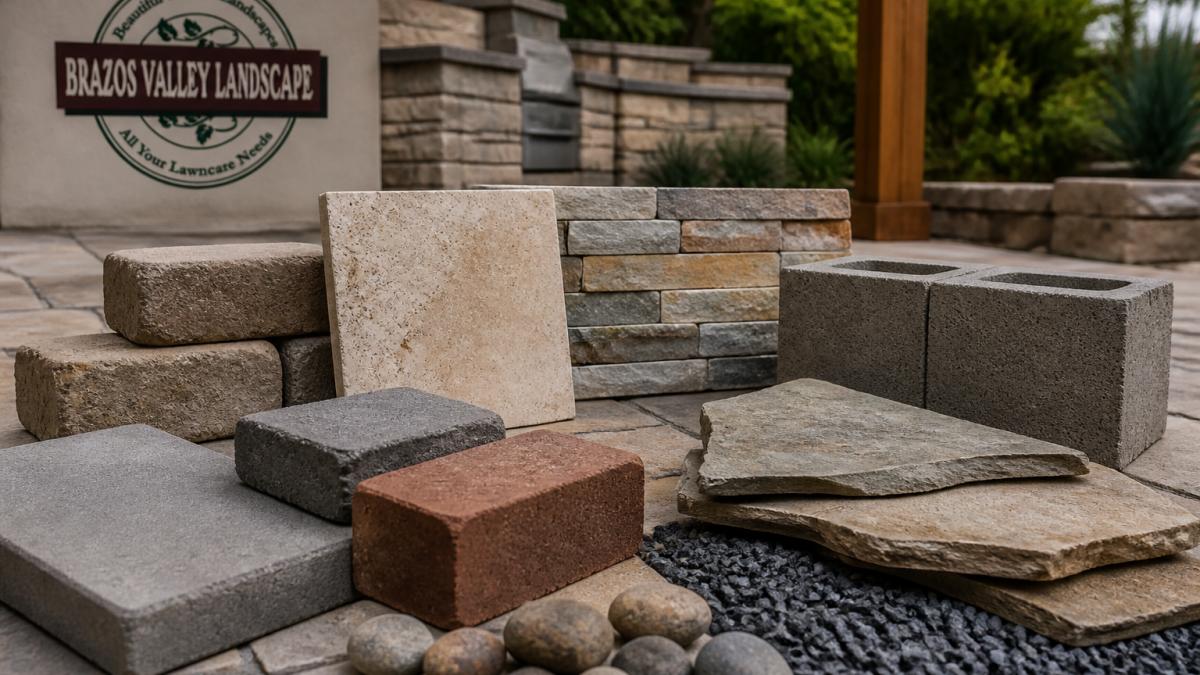
Concrete pavers and clay brick are the two most common hardscaping materials for patios because they balance cost, durability, and repairability better than almost anything else.
Concrete Pavers
Concrete pavers are individual units laid over a compacted base and sand joint. Because each unit is separate, a cracked or stained paver can be lifted and replaced without touching the rest of the patio. They are a common choice for many installs for exactly that reason. A common mistake is skipping a proper base depth; pavers laid on thin or poorly compacted base settle unevenly within a year.
Clay Brick
Clay brick brings a warmer, more traditional character and holds color well over decades. It's heavier and typically costs more than concrete pavers, and installation takes longer because of the smaller unit size. Where a paver patio needs a crisp, uniform look, brick is the better match for period homes and formal designs.
Patio Pavers vs Stamped Concrete: Which Holds Up Better?
Patio pavers vs stamped concrete is the comparison we field most often, and the honest answer is that pavers win on repairability while stamped concrete wins on upfront simplicity. Stamped concrete is poured as a single slab and textured to imitate stone or brick, so it covers a large area quickly with fewer visible joints. The trade-off: when a slab cracks, the crack is permanent, and matching a repair to an aged slab is difficult.
Natural Stone Patio Pros and Cons
Natural stone patio pros and cons come down to character versus cost and maintenance. Flagstone and travertine deliver a look no manufactured product fully replicates, and both hold up well in heat. The cons: natural stone costs more per square foot, requires a skilled installer to set irregular pieces, and some varieties need periodic sealing to resist staining.
Flagstone and Travertine
Flagstone is a flat, irregular stone, usually sandstone or limestone, prized for its organic, one-of-a-kind surface. It suits rustic and naturalistic designs and handles foot traffic well. Travertine is a smoother, paler stone often chosen for pool decks because it stays cooler underfoot than darker materials. Both need a solid base and can benefit from sealing in high-traffic areas.
Least Expensive Patio Materials That Still Look Good
The least expensive patio materials that still look good are poured concrete, gravel, and basic concrete pavers, in roughly that order of cost. Poured concrete is the lowest-cost option and can be finished with a simple broom texture or a color hardener to avoid a plain gray slab. Gravel suits low-traffic areas and tight budgets but needs edging to stay put.
What Paver Patio Cost Actually Includes
Paver patio cost depends on square footage, site access, base depth, and drainage work, not just the surface material. The surface is usually the smallest swing factor in the quote. What moves the number most is everything under and around it.
The line items that drive the total:
- Excavation and removal. Hauling off an existing slab or old pavers adds disposal and labor. A patio over undisturbed soil is cheaper than one replacing a failed surface.
- Base material and compaction depth. A flexible paver system typically needs roughly 4 to 6 inches of compacted aggregate base plus about 1 inch of bedding sand, and the base is often the single largest labor line. Cutting base depth is the most common way a bid comes in low, and the most common reason a patio settles within a year.
- Drainage correction and grading. Regrading to shed water, adding a French drain, or tying into an existing storm line can rival the base cost on a sloped or poorly draining lot.
- Edge restraints and joint sand. Concrete edge restraint, spikes, and polymeric or stabilized joint sand are small line items that determine whether the field stays locked together.
Installed cost versus lifecycle cost
Upfront price is only the first number. The more useful comparison is what a material costs to own over 15 to 20 years, installed cost plus maintenance, repair, and replacement.
- Poured concrete has the lowest installed cost and near-zero routine maintenance, but a crack is permanent and a full replacement resets the clock. Its lifecycle cost is low until the first major failure, then it jumps.
- Stamped concrete sits above poured concrete on installed cost because of the stamping labor and color work, and it carries the same slab-crack risk plus the difficulty of matching a repair to aged color.
- Concrete pavers cost more than a slab upfront, but individual units can be lifted and reset. Over a long horizon, spot repair instead of full replacement is what pulls their lifecycle cost toward or below a slab's.
- Clay brick installs higher than concrete pavers because of the smaller unit size and longer set time, but it holds color for decades, so repainting or resealing is rarely part of its lifecycle.
- Natural stone carries the highest installed cost and, for some varieties, recurring sealing. Its lifecycle advantage is longevity: a well-set flagstone or travertine patio can outlast two poured slabs.
Pricing varies by project, so we quote each one individually rather than publish a flat rate. But when you compare bids, compare the base and drainage scope first; that is where the durability you are paying for actually lives.
Climate, Drainage, and Slip Resistance in the Brazos Valley
Climate, drainage, and slip resistance decide whether a patio stays safe and stable through the seasons, and they are the factors most material guides skip. Here is how each one actually works on a patio, and how the common materials behave.
Expansive clay and movement
The local soils are expansive clays that swell when wet and shrink when dry. That seasonal movement is the enemy of any rigid surface. A poured slab resists the movement until it doesn't, then cracks along its control joints or wherever the subgrade shifted. A flexible paver system is designed to move with the soil one unit at a time, which is why base preparation and compaction depth matter more here than the surface choice.
Freeze-thaw and water
Even mild freeze-thaw cycles punish any surface that traps water. Water that sits in a joint, a low spot, or a hairline crack expands when it freezes and pries the surface apart a little more each cycle. The fix is drainage, not a thicker surface: slope the patio away from the house at roughly a 1 to 2 percent grade, keep joints filled, and make sure the base sheds water rather than holding it.
Heat retention
Surface temperature is a comfort issue, not just an aesthetic one. Dark materials, dark pavers, dark stamped concrete, dark flagstone, absorb and re-radiate heat, which makes a patio uncomfortable in the afternoon and hard on bare feet. Lighter travertine and light-colored pavers stay noticeably cooler underfoot, which is why travertine is a common pool-deck choice.
Slip resistance and accessibility
Slip resistance is about surface texture when wet, not just the material name. Textured pavers, honed travertine, and flagstone with a natural cleft generally offer better traction than polished stone or a slick sealed slab. Occupational Safety and Health Administration guidance on walking-working surfaces treats slip resistance as a core safety concern on walking surfaces, and the same principle applies to a wet patio. For material performance data, American Society for Testing and Materials standards publishes test methods covering abrasion and slip resistance.
Accessibility deserves the same attention. For households with mobility needs, the details that matter are level transitions from the house to the patio, joints narrow enough not to catch a wheel or a cane tip, and a firm, even surface. Tightly set pavers with fine joint sand create a smoother roll than wide, deep joints or loose gravel, and a flush threshold at the door removes the trip and roll barrier that a raised lip creates.
Matching material to condition
- Expansive soil, want repairability: concrete pavers on a deep compacted base.
- Pool deck, want cool and grippy: honed or textured travertine.
- Large flat area, tight budget: poured or stamped concrete, accepting the crack risk.
- Mobility needs: tightly set pavers or honed stone with flush transitions.
- Stormwater concerns: permeable pavers over an open-graded base.
Choose for the conditions first, then for the look. The material that wins on a photo rarely wins on a lot with clay soil, a slope, and a freeze-thaw cycle.
Frequently Asked Questions
What is the least expensive hardscape material for a patio?
Gravel and crushed stone usually cost the least up front, followed by poured concrete slabs. Among materials that give you a solid, furniture-ready flat surface, basic concrete pavers tend to be the most affordable. Keep in mind that the cheapest material is not always the cheapest project: base preparation, labor, and long-term repair needs all factor into what you actually pay. Ask for a written quote that separates material and installation.
Are concrete pavers or stamped concrete better for a patio?
It depends on how you plan to use the space. Stamped concrete gives you a seamless look and lower initial cost, but it can crack and repairs are visible. Concrete pavers cost more up front, yet individual units can be lifted and replaced if they shift or break, which matters in areas with clay soil and seasonal movement. For long-term durability and easier repair, pavers usually win.
What are the pros and cons of natural stone patios?
Natural stone such as flagstone and travertine delivers unmatched color, texture, and character, and it holds up for decades with proper base preparation. The trade-offs are higher material cost, heavier installation, and more variation between pieces, which some homeowners love and others find inconsistent. Natural stone also needs sealing in many cases to resist staining and freeze-thaw damage.
Which patio material is easiest to maintain?
Concrete pavers and poured concrete are generally the easiest to maintain. Both handle routine sweeping and occasional rinsing well, and pavers can be re-sanded with polymeric sand to keep joints tight. Natural stone and brick need more attention over time, including resealing and weed control between joints. Whatever material you choose, proper drainage and base preparation do more for long-term upkeep than the surface itself.
A patio that looks right but drains wrong becomes a liability within a season or two. Brazos Valley Landscape, Inc. handles the full scope: custom landscape design and installation, drainage and grading, outdoor living structures, kitchens, and swimming pools, all built around your property's specific soil and slope. Get started with Brazos Valley Landscape, Inc. and turn your outdoor vision into a space that holds up for years.