
 ultimate-guide
How to Increase Home Value: 7 Proven Strategies for 2026
Table of Contents
- Best Landscaping for Home Value: Where to Start
- Curb Appeal Ideas for Resale That Buyers Notice First
- Outdoor Living Space ROI: What Actually Pays You Back
- How to Increase Home Value with Interior Updates
- Energy Efficiency and Smart Home Upgrades That Raise Market Value
- Funding Your Improvements: Financing and Tax Implications
- How to Increase Home Value Without Over-Improving for Your Neighborhood
- Frequently Asked Questions
Last Updated: September 12, 2026
Best Landscaping for Home Value: Where to Start
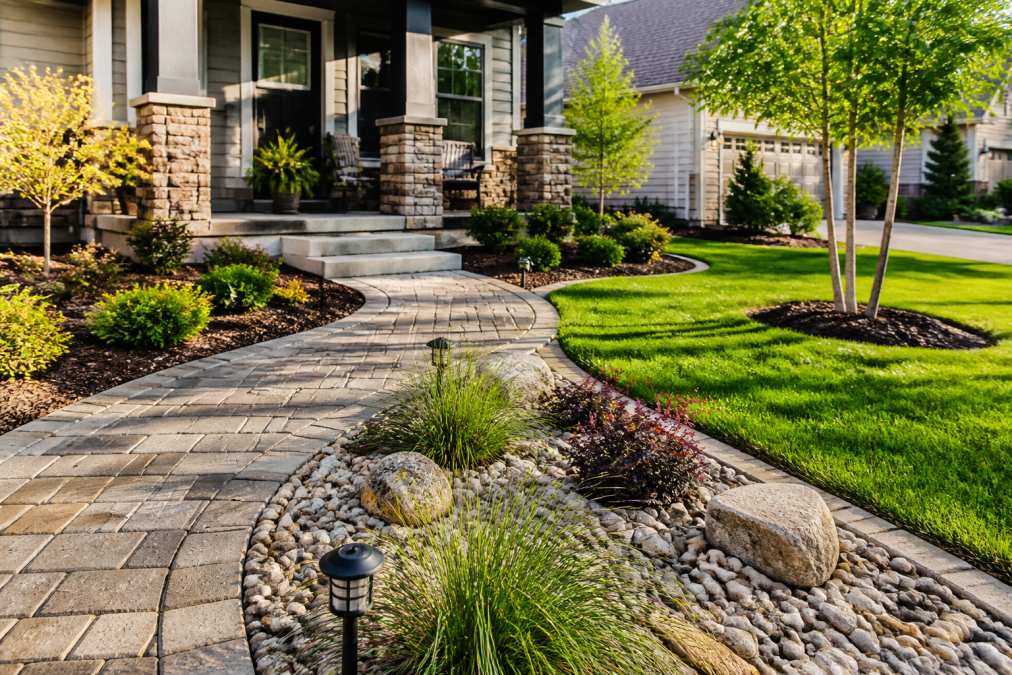
The highest-return exterior project for most homes is a layered front-yard landscape: healthy mulch beds, trimmed shrubs, and a defined walkway that pulls the eye toward the front door. According to the Appraisal Institute's guidance on landscaping and property value, well-maintained landscaping contributes to a home's overall market value because it signals that the property has been cared for. This guide from Brazos Valley Landscape, Inc. breaks down seven strategies for how to increase home value in 2026, from the cheapest fixes to the projects that genuinely pay back.
Start with what buyers see first. Mature trees, clean bed lines, and consistent ground cover do more for perceived value than a single expensive feature. A common mistake is planting for instant impact and ignoring maintenance: overgrown beds two seasons later undo the first impression.
What is the best landscaping for home value?
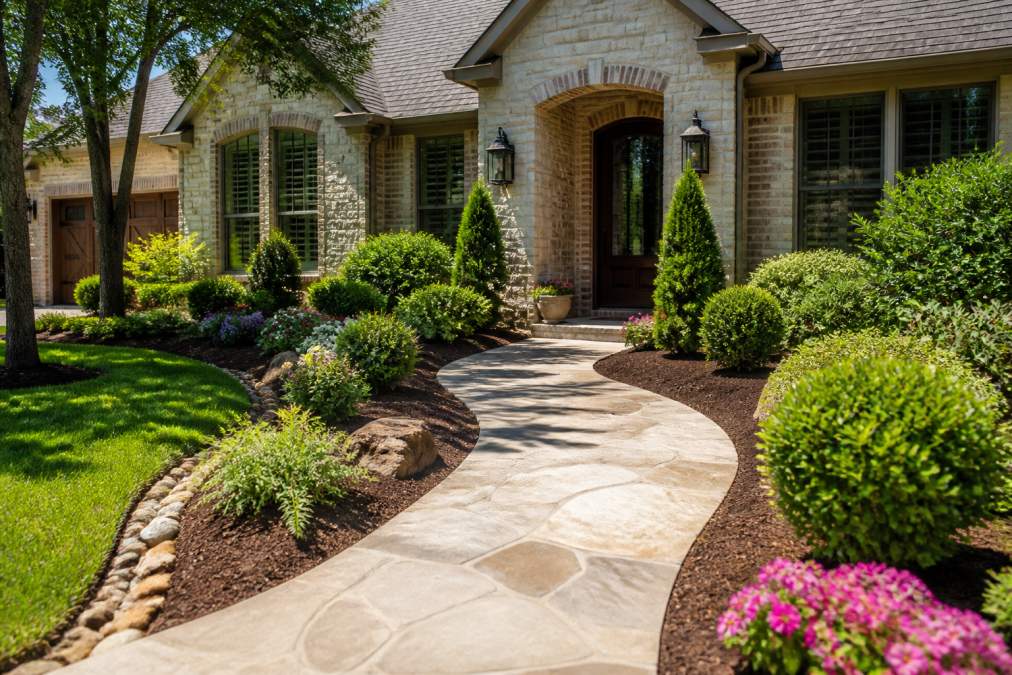
The best landscaping for home value is a low-maintenance, regionally appropriate design with clear bed edges, healthy turf, and a visible path to the entry. Native and adapted plants cost less to keep alive, which matters when a buyer calculates ongoing yard costs. If you want a professional read on your specific lot, a design consultation is the fastest way to avoid expensive guesswork.
Curb Appeal Ideas for Resale That Buyers Notice First
Buyers form an opinion before they reach the porch. The improvements that move the needle fastest are the ones that read clearly from the street: a pressure-washed driveway, fresh mulch, edged beds, a repainted or replaced entry door, and updated exterior light fixtures.
Curb appeal ideas for resale that consistently work include:
- Refresh mulch and re-edge all beds
- Trim shrubs below window lines so the facade reads open
- Replace dated porch lighting and house numbers
- Power-wash walkways, siding, and driveways
- Add two matching planters flanking the entry
Siding replacement and stone veneer are the heavy exterior projects that appraisers treat as capital improvements rather than cosmetic updates. They cost more, but they change how the whole house is categorized.
Outdoor Living Space ROI: What Actually Pays You Back
Not every backyard build returns your money at resale. A well-built deck or patio tends to hold value because it adds usable square footage outdoors; a highly personalized water feature or a pool can be a coin flip depending on your local real estate market.
The honest split looks like this:
| Project | Typical Buyer Appeal | Maintenance Burden | Best For |
|---|---|---|---|
| Patio or deck | High | Low | Most homes |
| Outdoor kitchen | Medium-High | Medium | Entertainers |
| Pergola or covered structure | Medium-High | Low | Shade-poor yards |
| Pool | Market-dependent | High | Warm-climate neighborhoods |
| Water feature | Low-Medium | Medium | Personal enjoyment |
How to Increase Home Value with Interior Updates
Interior work and exterior work compound each other. A buyer who loves the yard still walks into a kitchen with a failing layout, and that becomes a negotiation. Kitchen and bathroom remodeling remain the interior projects buyers weigh most heavily, followed by structural repairs that remove doubt from an inspection.
The mistake most homeowners make is treating "interior updates" as one bucket. It is not. Interior projects fall into three tiers, and each tier behaves differently at resale.
Tier 1, Cosmetic refresh (lowest cost, broadest buyer appeal). Paint in neutral tones, replace dated cabinet hardware and light fixtures, swap out old outlet covers and switch plates, re-caulk tubs and sinks, and replace worn faucets. These are the projects that photograph well and read as "move-in ready" in listing photos. A common pattern is that a buyer's first walkthrough is really a scan for anything that looks like deferred maintenance, and cosmetic fixes remove those flags cheaply.
Tier 2, Targeted replacement (mid cost, project-dependent return). This is where flooring, countertops, and dated bathroom vanities live. Flooring is the highest-leverage Tier 2 item because it runs through the whole house and buyers notice transitions between rooms. Consistent flooring across main living areas reads as more updated than a patchwork of newer and older surfaces. In bathrooms, replacing a vanity, mirror, and light bar together often costs far less than a full remodel and delivers most of the perceived update.
Tier 3, Full kitchen and bath remodel (highest cost, most variable return). A full kitchen remodel is the single most expensive interior project most homeowners will consider, and its return depends heavily on whether the current kitchen is functionally obsolete (bad layout, no dishwasher, one outlet per wall) or merely dated. If the layout works and the cabinets are solid, refinishing or repainting cabinets and replacing countertops and backsplash usually captures most of the buyer appeal at a fraction of the cost. If the layout is broken, buyers will price in the cost of fixing it themselves, and a remodel becomes harder to justify purely on resale math.
Structural repairs come first. Cosmetic work on top of an unresolved foundation, roof, or moisture issue is money spent twice, because the buyer's inspector will surface the underlying problem and the negotiation will reset to zero.
A practical sequencing rule for homeowners listing within a year:
- Fix anything an inspector would flag (water intrusion, roof, HVAC, electrical)
- Neutralize paint and replace worn flooring in main living areas
- Refresh kitchen and bath fixtures, hardware, and lighting
- Only then consider a full remodel, and only if the layout is genuinely obsolete
Energy Efficiency and Smart Home Upgrades That Raise Market Value
Energy efficiency and smart home upgrades are usually lumped together in home-value guides, but they behave very differently at resale. Efficiency upgrades change a buyer's ongoing cost of ownership, which is quantifiable and shows up in how buyers compare two similar homes. Smart home upgrades change how a home feels, which is real but harder to price. Treating them as the same category is why so many homeowners overspend on the wrong one.
Efficiency upgrades that buyers actually price in. The upgrades that move the needle are the ones a buyer can verify and that reduce a recurring bill: added attic insulation, air sealing around doors and windows, a higher-efficiency HVAC system, and updated windows in older homes. The U.S. Department of Energy's guidance on home energy upgrades outlines which improvements most affect efficiency, and it is worth reading before you spend on anything with a compressor or a control panel. A common pattern is that buyers ask for the last twelve months of utility bills during due diligence, if your bills are visibly lower than comparable homes, that becomes a selling point you can point to directly.
Efficiency upgrades that are harder to price. Solar panels are the clearest example. They reduce operating cost, but buyers also inherit the financing arrangement, the maintenance, and the roof age question. Whether solar helps or hurts resale depends heavily on whether the system is owned outright or leased, and on how the local market values it. Geothermal and whole-house battery systems fall into the same category: real savings, uncertain resale treatment.
Smart home upgrades: perceived value, not appraised value. Smart thermostats, video doorbells, smart locks, and smart lighting are inexpensive relative to how modern they make a listing feel. They show up in listing descriptions and in buyer walkthroughs. What they rarely do is change an appraisal, because appraisers generally do not assign separate value to consumer electronics. The honest framing is that smart home upgrades help you compete on presentation, not on price.
The sustainability-versus-resale distinction. This is the gap most guides skip. A green upgrade helps resale when it (a) reduces a bill the buyer will pay, (b) is visible or verifiable during a showing or inspection, and (c) does not create a new obligation the buyer has to assume. An upgrade fails to help resale when it saves money but is invisible, or when it saves money but transfers a lease, a maintenance contract, or an unfamiliar system the buyer does not want to own.
A simple test before you spend:
- Can the buyer see it or verify it during a walkthrough or inspection?
- Does it lower a bill the buyer will actually pay?
- Does it avoid creating a new obligation (lease, service contract, unfamiliar maintenance)?
If the answer to all three is yes, the upgrade is likely to hold value. If the answer to two or fewer is yes, treat it as a personal improvement rather than an investment.
Pair efficiency work with your exterior plan. Shade trees and correctly placed landscaping reduce cooling load, so the landscaping budget and the HVAC budget are not really separate decisions. A tree planted on the west side of a home does some of the same work as a smaller air conditioner, and it does it for decades.
Funding Your Improvements: Financing and Tax Implications
Most homeowners fund renovations through a home equity loan, a HELOC, a cash-out refinance, or savings. Which one makes sense depends on how long you plan to stay and how much equity you are willing to convert. If you are selling soon, keep borrowed amounts modest so the project still nets a gain.
The tax side is where most guides stop short. The IRS guidance on capital improvements and home basis explains that certain capital improvements can adjust your cost basis, which affects how a gain is calculated when you sell. Routine repairs and maintenance are generally treated differently from capital improvements, and the distinction is not always obvious. Talk to a tax professional about your specific situation; the rules are detailed and depend on your circumstances.
How to Increase Home Value Without Over-Improving for Your Neighborhood
The ceiling on your home's value is set by the neighborhood, not by your taste. If comparable homes nearby sell in a certain range, the most elaborate property on the street often struggles to appraise above that band, which means the extra money you spent does not come back.
This is where neighborhood-specific ROI analysis matters. Before committing to a project, look at what nearby homes actually have: if most have a basic patio and none have pools, a pool is a personal purchase, not an investment. If every comparable home has updated landscaping and yours is bare, that gap is costing you at every showing.
A practical rule: match the top quartile of your neighborhood, then stop. Landscaping, hardscaping, and outdoor living structures should make your property the best-maintained version of what it already is, not a different category of property entirely.
The hardest part of increasing home value is knowing where your money actually returns and where it just feels good to spend. Brazos Valley Landscape, Inc. designs and installs custom landscape and hardscape projects, builds outdoor living structures, kitchens, and swimming pools, and maintains lawns and landscapes across the greater College Station, Bryan, Navasota, Brenham, and Hempstead areas. If you want a plan built around your property rather than a generic checklist, get a design consultation from Brazos Valley Landscape, Inc. and turn your outdoor vision into a finished space that holds its value.
Frequently Asked Questions
What increases a house's value the most?
Kitchen and bathroom remodels consistently rank among the highest-return interior projects, while exterior upgrades like siding replacement, new entry doors, and professional landscaping also deliver strong returns. According to industry ROI data, garage door replacement and manufactured stone veneer often recoup well over 100% of their cost at resale. The biggest gains come from combining curb appeal improvements with functional interior updates that match your neighborhood's price ceiling.
How does professional landscaping impact property appraisal?
Appraisers factor in landscaping as part of overall curb appeal and property condition. A well-designed yard with healthy plantings, defined beds, and functional hardscaping signals a maintained property, which can support a higher appraised value. Appraisal reports often note landscaping quality alongside structural and cosmetic condition, so investing in professional design and installation can show up directly in your home's assessed market value.
What are the most cost-effective ways to boost curb appeal?
Fresh mulch, edged beds, trimmed shrubs, and a clean walkway cost little but change how buyers perceive a home. Painting the front door, replacing outdated light fixtures, and adding seasonal color also deliver outsized impact for modest spend. For resale, focus on the first 10 seconds of a buyer's view: the driveway, entry, and front facade. These curb appeal ideas for resale often yield the highest visual return per dollar.
Do outdoor living structures like kitchens and patios increase home value?
Yes, in markets where outdoor entertaining is in demand. A well-built patio, covered pergola, or outdoor kitchen expands usable square footage and appeals to buyers seeking move-in-ready outdoor spaces. The outdoor living space ROI varies by region and build quality, but functional, low-maintenance designs tend to appraise favorably. Keep the design proportional to your home and lot so the investment matches neighborhood expectations.
What common home maintenance tasks prevent value depreciation?
Deferred maintenance is one of the fastest ways to lose value. Fixing roof leaks, repairing siding, servicing HVAC systems, and addressing drainage issues protect both structure and appearance. Water pooling near the foundation can lead to costly repairs and scare buyers away. Routine upkeep like gutter cleaning, caulking, and seasonal lawn care keeps the home in showing condition and prevents small problems from becoming appraisal red flags.
How to increase home value by $50,000?
Reaching a $50,000 value gain usually requires a combination of high-impact projects rather than a single fix. A minor kitchen remodel, updated bathrooms, new siding, and a professionally designed landscape package can collectively move the needle. The exact result depends on your local real estate market, current home value, and how well improvements align with neighborhood comps. Consult a real estate agent for a realistic target before committing to a budget.