 how-to
7 Hardscape Maintenance Habits That Protect Your Pavers
Last Updated: October 30, 2026
Quick Summary
Effective hardscape maintenance starts with a simple daily habit: sweep pavers to remove leaves and organic matter that hold moisture and feed moss, mildew, and weeds in the joints. For routine cleaning, use a soft-bristle brush, a garden hose, and mild detergent, and reserve pressure washing for stubborn buildup with a wide fan tip held 12 to 18 inches away.
- Sweep weekly during heavy leaf-fall months and after every storm to prevent stains.
- Use a 25-degree or wider fan tip and keep the wand 12 to 18 inches from the surface.
- Replenish joint sand after pressure-washing by sweeping new sand in and compacting it.
- Test any cleaner on an inconspicuous spot and let it dry fully before judging results.
- Call a professional when pavers shift, crack, pool water, or joints won't hold sand.
Table of Contents
- Start With a Simple Sweeping and Debris Routine
- How to Clean Pavers Without Damaging the Surface
- Pressure-Washing Settings and Precautions That Protect Hardscaping
- Stain Removal, Weed Control, and Joint Sand Care
- How to Seal Pavers and When Sealing Is Worth It
- Paver Patio Maintenance by Material and Season
- Your Hardscape Maintenance Checklist for Every Season
- When to Call Brazos Valley Landscape for Hardscape Repairs
- Frequently Asked Questions
Start With a Simple Sweeping and Debris Routine
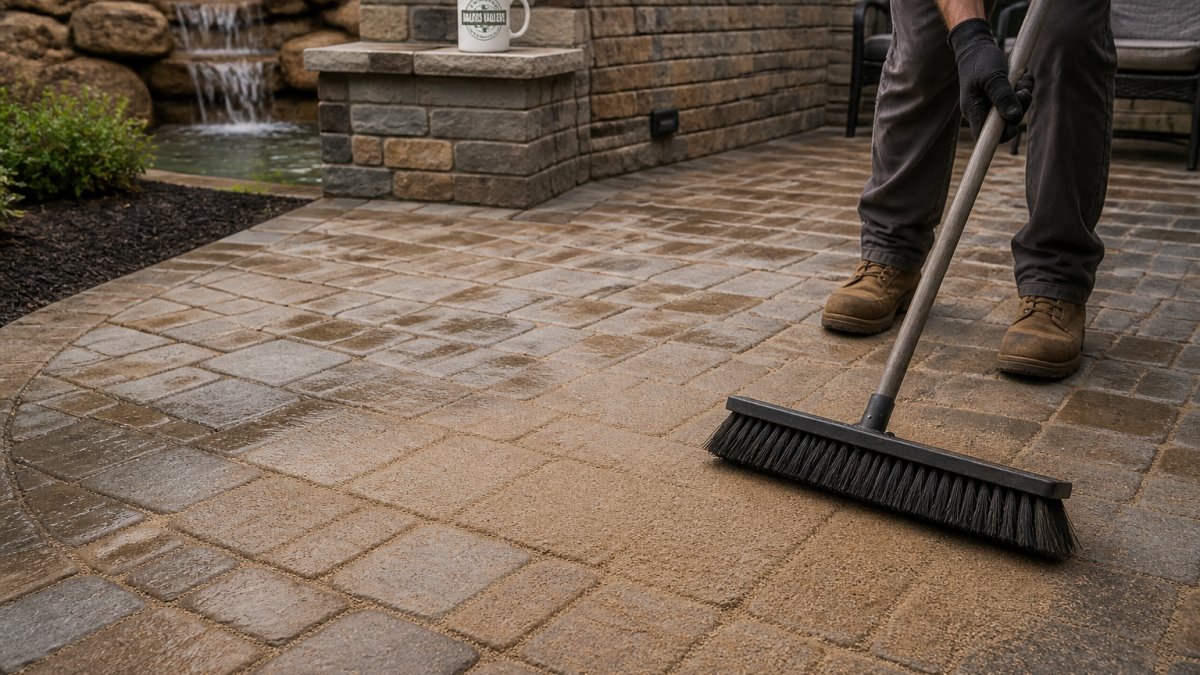
The single most effective hardscape maintenance habit costs nothing but five minutes a day: sweep your pavers. It's the advice most people ignore until stains set in. Leaves, grass clippings, and organic matter hold moisture against the surface, and moisture is what feeds moss, mildew, and weed growth in the joints. A stiff broom and a few minutes after the yard work is done will prevent more damage than any sealer you can buy. Hardscape maintenance starts here, not with chemicals.
Make it a routine rather than a chore. Sweep weekly during heavy leaf-fall months, and after every storm. Clear debris from drainage channels and low spots where water pools, because standing water is the first sign of a base problem you'll want to catch early.
How to Clean Pavers Without Damaging the Surface
Regular cleaning is where most homeowners accidentally do damage. The safe approach is simple: remove loose debris first, then scrub with a soft-bristle brush, a garden hose, and a mild detergent. That's it for routine cleaning. Harsh chemicals, wire brushes, and aggressive scrubbing strip the surface and open the door to long-term wear.
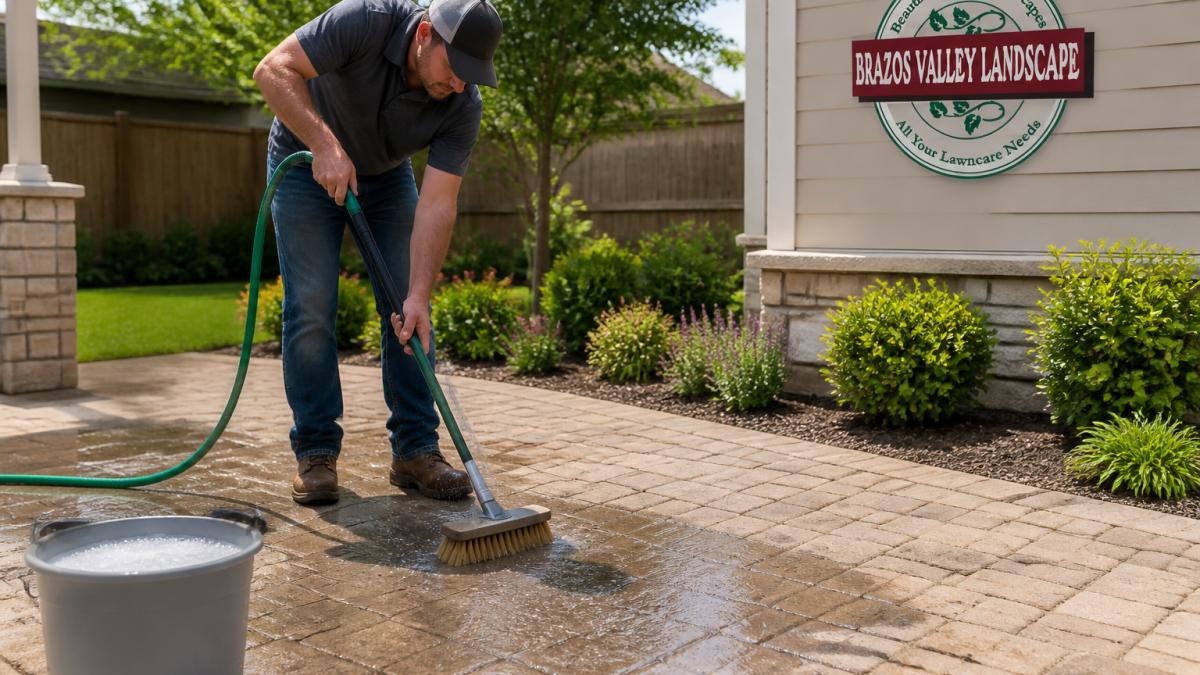
For deeper periodic washing, work in sections and rinse thoroughly so soap residue doesn't dry on the surface. Clean from the top of a slope downward so dirty water runs off rather than soaking back into clean pavers. When you're learning how to clean pavers, remember that patience beats pressure: a gentle pass repeated twice is safer than one aggressive pass.
Pressure-Washing Settings and Precautions That Protect Hardscaping
Yes, you can pressure-wash pavers, but the settings matter more than the machine. The goal is to lift dirt without disturbing the surface or the joint sand that holds the system together. Here's the guidance to keep in mind before you rent or buy a unit.
Pressure. For most paver and stone surfaces, stay in the low-to-moderate range rather than running a unit at its maximum output. Higher pressure belongs on concrete flatwork, not on jointed pavers or softer stone.
Nozzle and distance. Use a wide fan tip, 25 degrees or wider, rather than a narrow 0-degree or turbo tip. Hold the wand at a consistent distance, roughly 12 to 18 inches from the surface, and keep it moving.
Joint sand is the thing you're protecting. Pressure-washing joint sand out is the most common self-inflicted hardscape problem we see. Once the sand is gone, pavers shift, weeds move in, and water finds its way under the surface. If you do pressure-wash, plan to replenish joint sand afterward, sweep new sand into the joints and compact it into place once the surface is dry.
Safety and setup. Wear eye protection and closed-toe shoes, and keep the wand pointed away from people, pets, and nearby plants, overspray can strip mulch and damage landscaping. Never point the wand at yourself or others, and be aware that the recoil can surprise a first-time user. If you're cleaning near a house, keep water away from siding, outlets, and window seals.
When to skip the pressure washer. Delicate natural stone, older brick with soft mortar, and any surface with existing cracks or loose pavers are better served by hand scrubbing. A gentle pass repeated twice is safer than one aggressive pass, and patience beats pressure every time.
Stain Removal, Weed Control, and Joint Sand Care
Stains respond best to prompt attention, matched to the type of spill. Organic stains like leaves and berries usually lift with a mild detergent and a little dwell time. Rust and mineral stains need a dedicated cleaner formulated for the surface material. Grease and oil call for an absorbent material first, then a degreaser. Always test any cleaner on an inconspicuous spot before applying it broadly.
Weeds and moss between pavers signal two things: organic matter collecting in the joints and, often, moisture that isn't draining. Pull weeds by hand or use a joint-safe tool, then address the underlying cause. If weed growth keeps returning in the same low area, that's a drainage question, and our drainage solutions address the water rather than just the symptoms.
Joint sand is the backbone of a stable paver surface. Replenish it when you notice gaps or settling, sweeping new sand into the joints and compacting it into place.
How to Seal Pavers and When Sealing Is Worth It
Sealing is optional, and it's not a cure-all. A quality paver sealer can deepen color, resist stains, and make cleaning easier, but it won't fix a failing base, correct drainage, or stop weeds that are growing from below. Seal only a clean, dry, fully cured surface, and only when the weather forecast is clear for the following days.
When is sealing worth it? If your pavers are in a high-traffic area, prone to staining, or you want to lock in the color of a natural stone installation, a sealer earns its place. If your surface is already shifting or holding water, fix that first. Learning how to seal pavers properly is mostly about timing and preparation, not the product itself.
Paver Patio Maintenance by Material and Season
Different materials demand different care, and treating them all the same is a mistake. The table below is the quick-reference version we use on service calls; the notes after it explain the mechanism behind each recommendation so you can adapt when your surface isn't a perfect match.
| Material | Routine cleaner | Pressure-washing guidance | Watch for |
|---|---|---|---|
| Concrete pavers | Mild detergent and water; oxygen bleach for organic stains | Wide fan tip, moderate pressure, keep the nozzle moving; expect joint-sand loss and plan to refill | Efflorescence (white mineral bloom), chipping at edges from a narrow stream |
| Natural stone (flagstone, travertine, bluestone) | pH-neutral stone cleaner; avoid acidic products on acid-sensitive stone | Lower pressure than concrete; a wide fan tip held well back from the surface | Etching, pitting, and dulling from acid cleaners or a concentrated stream |
| Clay brick | Mild detergent; avoid harsh acids that attack the surface | Gentle pressure only; brick faces can spall | Spalling, crumbling mortar joints, efflorescence |
| Porcelain pavers | Mild detergent and water; most stains wipe up | Low pressure; edges chip easily | Chipped edges, loose joints, surface scratches from grit |
Concrete pavers. These are the most forgiving surface, which is why they're common on driveways and patios. Mild detergent handles routine soil, and an oxygen-based cleaner is the safer choice for organic staining than a chlorine bleach, which can alter color over time.
Natural stone. Stone is where well-intentioned cleaning does the most damage. Acidic cleaners, including many bathroom and rust removers, etch calcium-based stone such as travertine and limestone, leaving a dull, pitted patch that no sealer will hide.
Clay brick. Brick faces can spall, flake and crumble, when hit with too much pressure or harsh acid. Gentle pressure, a mild detergent, and attention to mortar joints are the priorities. If mortar is crumbling, that's a repointing question, not a cleaning one.
Porcelain pavers. Porcelain is dense and stain-resistant, so routine cleaning is easy. The vulnerability is mechanical: edges chip if handled roughly or hit with a concentrated stream, and grit underfoot can scratch the surface. Low pressure and a soft brush are all you need.
Season matters too. In spring, clear winter debris and inspect for frost damage, freeze-thaw cycles open joints and heave pavers, and catching that early prevents a larger repair. In summer, clean and reseal if your surface calls for it.
Our guide to hardscaping materials covers these differences in more detail so you can match your cleaning routine to your specific surface.
Your Hardscape Maintenance Checklist for Every Season
A written plan beats good intentions. Here's the routine we recommend:
| Season | Key Tasks | Frequency |
|---|---|---|
| Spring | Clear debris, inspect for frost damage, pull weeds, check joint sand | Once, thoroughly |
| Summer | Deep clean, spot-treat stains, reseal if needed | Monthly cleaning |
| Fall | Sweep leaves weekly, clear drainage, refresh joint sand | Weekly sweeping |
| Winter | Avoid harsh de-icers, inspect for shifting, keep drains clear | As needed |
- Sweep weekly and after storms
- Clear debris from drains and low spots
- Spot-treat stains promptly
- Pull weeds and check joint sand
- Inspect for cracks and shifting pavers
- Deep clean and reseal seasonally
If managing the full routine yourself feels like too much, you can ask about seasonal cleanup services.
When to Call Brazos Valley Landscape for Hardscape Repairs
Some problems are DIY; others need a professional eye. Call for help when you notice shifting pavers, cracked surfaces, persistent pooling water, or joints that won't hold sand no matter how often you refill them. These usually point to a base or drainage issue beneath the surface, and no amount of cleaning or sealing will fix what's happening underneath.
Brazos Valley Landscape, Inc. serves the greater College Station, Bryan, Navasota, Brenham, and Hempstead areas with comprehensive landscaping and hardscaping services. If you'd like to see what we offer before deciding, review our hardscape services, and when you're ready to talk, use our contact page to reach us.
Frequently Asked Questions
How often should you clean hardscaping surfaces?
Sweep weekly and rinse monthly during the growing season. Give paver patios and walkways a deeper wash two to three times a year, in spring and fall at minimum. Clean stains as soon as you notice them, since oil, rust, and leaf tannins set deeper the longer they sit. If your hardscape sits under trees or near a pool, plan on more frequent washing because debris and splashing accelerate buildup in the joints.
Should you seal pavers, and how often?
Sealing is worth it for most paver patios because it slows stain absorption, reduces weed growth in the joints, and helps sand stay put. How often you reseal depends on the product and foot traffic, but most pavers need a fresh coat every two to three years. Test by dripping water on the surface: if it soaks in instead of beading, it is time to reseal. Always clean and re-sand before sealing.
How do you prevent weeds from growing between pavers?
Keep joint sand topped off, because gaps are where weed seeds land and sprout. Pull weeds by hand or use a stiff brush before they go to seed, and avoid harsh chemical weed killers that can stain stone or run off into planting beds. A properly filled joint, combined with sealing, blocks most growth. If weeds keep returning in one spot, the base under that area may be settling and trapping moisture.
When should you hire a professional for hardscape maintenance?
Call a professional when pavers are loose, rocking, or sitting lower than their neighbors, when cracks spread across concrete or stone, or when water pools on the surface after rain. Those point to base or drainage problems that cleaning cannot fix. Contact Brazos Valley Landscape for an assessment.
Your pavers are only as good as the care behind them. If shifting, settling, or drainage problems have gotten ahead of your maintenance routine, Brazos Valley Landscape, Inc. can assess the surface, diagnose the underlying cause, and recommend repairs or a fresh installation built to last. Get started with Brazos Valley Landscape, Inc. and keep your outdoor surfaces looking their best for years to come.