 listicle
What Are the Custom Swimming Pool Design Trends for 2026?
Last Updated: October 25, 2026
Quick Summary
Custom swimming pool design trends in 2026 favor clean geometry, warm natural materials, and pools that earn their keep year-round. The biggest shift is how homeowners think about the pool itself: no longer a summer-only luxury behind a fence, it is the anchor of an outdoor living space, and every design decision now starts with how the family will actually use the yard.
- Geometric shapes like rectangles and L-shapes suit modern homes and tight lots but leave no room for layout errors.
- Natural stone coping and earthy tones like pearl beige and lagoon green need sealing and occasional cleaning.
- Plunge pools, lap-sized rectangles, and Baja shelves help compact pools fit tight lots when circulation is planned first.
- Variable-speed pumps are the single most impactful energy upgrade, though they typically cost more upfront.
- Dark finishes and moody blues show debris and waterline film more than light finishes, so expect more brushing.
Table of Contents
- Custom Swimming Pool Design Trends 2026: What Homeowners Are Asking For
- Modern Swimming Pool Ideas: Clean Lines and Geometric Shapes
- Natural Pool Design Ideas: Stone, Earthy Tones, and Lagoon Green
- Small Backyard Pool Ideas: Plunge Pools, Baja Shelves, and Tight-Space Layouts
- Energy-Efficient Pool Features That Cut Operating Costs
- Pool Tile, Finishes, and Color Palettes Trending for 2026
- Infinity Edges, Water Features, and Poolside Lighting
- Planning Your Custom Swimming Pool with Brazos Valley Landscape
- Frequently Asked Questions
Custom Swimming Pool Design Trends 2026: What Homeowners Are Asking For
Custom swimming pool design trends in 2026 favor clean geometry, warm natural materials, and pools that earn their keep year-round. This guide answers them directly.
The biggest shift this year is not a color or a shape but how homeowners think about the pool itself. No longer a summer-only luxury behind a fence, it is the anchor of an outdoor living space, and every design decision now starts with how the family will actually use the yard.
Below, we break down the trends homeowners are asking for, what each costs in maintenance and planning terms, and where each fits best.
| Trend | Best For | Watch Out For |
|---|---|---|
| Geometric shapes | Modern homes, tight lots | Poorly planned decking transitions |
| Natural stone and earthy tones | Warm, organic landscapes | Sealing and upkeep on porous stone |
| Plunge pools and Baja shelves | Small backyards | Shelf depth mistakes that limit use |
| Variable-speed pumps and LED | Lower long-term bills | Upfront cost on equipment |
| Dark and iridescent finishes | Statement water color | Hiding debris between cleanings |
Modern Swimming Pool Ideas: Clean Lines and Geometric Shapes
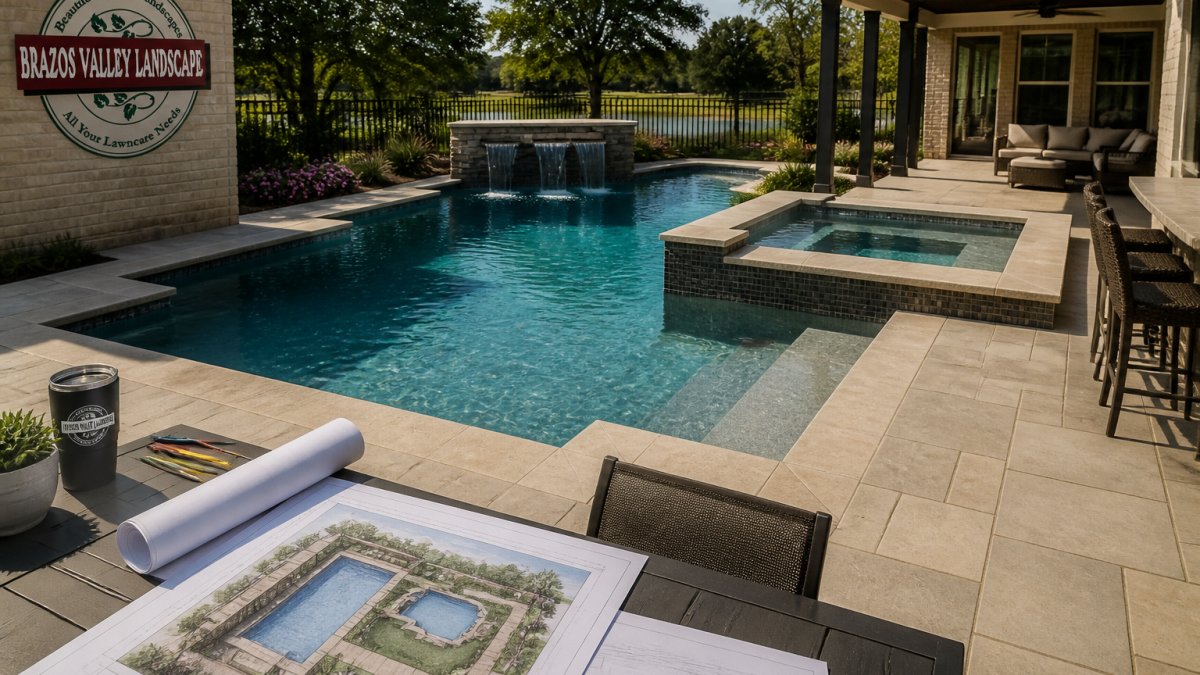
Modern swimming pool ideas in 2026 lean toward simple geometry: rectangles, squares, and L-shapes with crisp edges and minimal clutter. The look works because it does not fight the architecture of the house. A rectangular pool with a straight edge lines up with a patio, roofline, or property boundary, so the yard reads as one designed space instead of a pool dropped into a lawn.
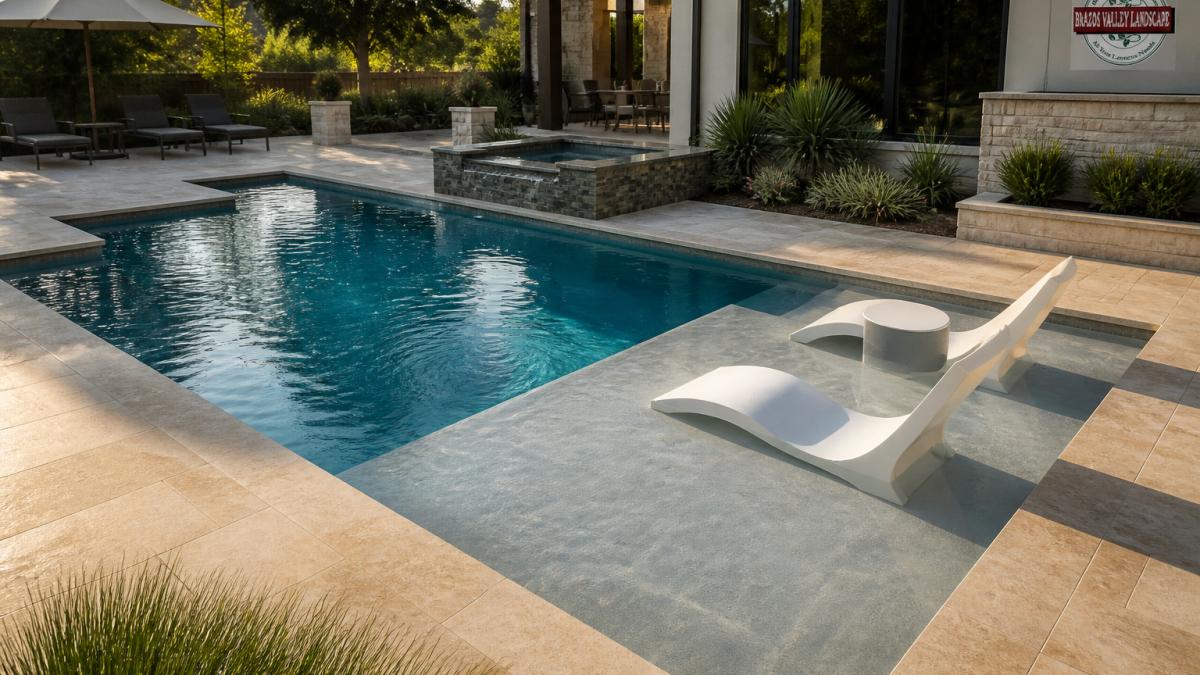
What most guides miss is that clean lines are unforgiving. A wavy freeform pool hides small errors in the shell and decking; a straight edge shows every one. If you want geometric, the layout has to be set correctly from the first stake in the ground, because there is no fudge factor later.
Sleek lines also change how you landscape around the pool. Straight edges pair best with structured planting, low walls, and repeated materials rather than loose, cottage-style beds. Decide that relationship before the decking is poured.
Natural Pool Design Ideas: Stone, Earthy Tones, and Lagoon Green
Natural pool design ideas pair stone decking and coping with water that reads green-blue rather than bright blue. The palette is earthy: pearl beige, warm sand, slate gray, and lagoon green. This suits homeowners who want a pool that feels like it belongs to the land rather than sitting on top of it.
Material selection drives the result. Natural stone coping and decking bring texture poured concrete cannot match, and the stone weathers into the landscape over time. The trade-off is upkeep: porous stone needs sealing and occasional cleaning, and some stones stay hotter underfoot. Ask about surface temperature before committing to dark stone around a shallow lounging area.
Water color is a finish decision, not a paint decision. A lagoon green or aqua teal look usually comes from the plaster or aggregate finish plus water depth, not dye. Get a sample board wet before you choose, since finishes look noticeably different underwater than dry on a table.
Small Backyard Pool Ideas: Plunge Pools, Baja Shelves, and Tight-Space Layouts
Small backyard pool ideas work best when the pool is one zone of a compact outdoor living plan, not the whole plan. A plunge pool, a lap-sized rectangle, or a pool with a Baja shelf can all fit a tight lot when the layout is drawn around circulation first.
A Baja shelf is a shallow, submerged ledge at one end of the pool, typically used for lounging chairs or for children to play on. A tanning ledge is the same idea, often sized for a couple of loungers. Both add usable square footage without much water volume, making them smart for small yards.
Watch out: shelf depth makes or breaks the feature. Too deep and it is uncomfortable to sit on; too shallow and the water barely covers the ledge. Decide the depth based on use, then hold the builder to it.
Compact pools also demand honest conversations about equipment placement. Pumps, filters, and heaters need service access. On a tight lot, that space has to be designed in, not squeezed in after the fact.
Energy-Efficient Pool Features That Cut Operating Costs
Energy-efficient pool features cut operating costs by reducing how hard the equipment works, not by adding gadgets. The 2026 shift is toward systems that work together: a variable-speed pump, a solar or heat-pump heater, a cover, and smart controls that run the pool only when needed.
Variable-speed pumps are the single most impactful upgrade. A pool's pump runs for hours daily, and most energy goes to circulation.
Heating is the next big lever. A gas heater warms a pool fast but burns fuel every time it runs.
Covers are the most underrated efficiency feature. A cover reduces evaporation, the largest source of heat and water loss from an outdoor pool, and keeps debris out so the filter and pump run less.
Water-saving features matter in drought-prone areas. A cartridge filter uses less backwash water than a sand filter, and a pool with a smaller surface area and deeper water loses less to evaporation.
Hydraulic design is the quiet factor. Oversized pipes, short runs, and well-placed returns let the pump work less to move the same water. Homeowners rarely ask about pipe sizing, which is exactly why it separates a well-built pool from an average one.
Smart controls tie it together. A controller that schedules the pump, heater, and lights based on weather and use patterns avoids running everything on a fixed timer.
For homeowners thinking about long-term operating costs, the U.S. Department of Energy guidance on pool pumps and efficiency is a useful starting point before you compare equipment options.
Pool Tile, Finishes, and Color Palettes Trending for 2026
Pool tile, finishes, and color palettes in 2026 split into two camps: soft and natural, or dark and dramatic. Pearl beige, warm white, and sand-toned plaster keep water bright and inviting, while slate gray and moody blues create deeper, more reflective water that photographs beautifully.
Tile color and texture matter as much as the finish. Iridescent glass tile catches light and adds movement along the waterline, while matte porcelain reads calmer and more contemporary. Texture is practical too: some tiles show waterline scale less than others, which affects how often the pool looks its best.
Watch out: dark finishes and moody blues show debris and waterline film more than light finishes. If you love the look, plan on more frequent brushing and skimming, or accept that the pool will not always look showroom-clean.
Material selection should also account for heat. Dark tile and dark stone absorb more sun and get hotter underfoot, so around a shallow shelf where kids will sit, test that difference before finalizing the palette.
Infinity Edges, Water Features, and Poolside Lighting
Infinity edges, water features, and poolside lighting turn a pool into a destination after dark. An infinity edge, or vanishing edge, lets water spill over one side into a catch basin so the pool appears to merge with the view beyond. It is the most dramatic option here and demands the most careful engineering.
Water features range from sheer descent waterfalls to scuppers and deck jets. They add sound and motion, making a backyard feel private even when neighbors are close. Fire features extend the usable season into cooler evenings, though placement must respect safety clearances and wind direction.
Poolside lighting is where the design pays off after sunset. LED fixtures in the pool, combined with landscape and patio lighting, let you change the mood of the whole yard with a single switch. To explore options around the deck and planting beds, our outdoor lighting service covers them, and our water features page shows the styles we install.
Planning Your Custom Swimming Pool with Brazos Valley Landscape
Planning a custom swimming pool starts with four decisions: how you will use the pool, what your site allows, what your climate demands, and what your budget covers. Settle those before anyone draws a shape, and the rest of the project moves faster.
Start with use, including who will use it. A family with young children needs shallow lounging space, clear sightlines from the house, and safe transitions. Lap swimmers need length and consistent depth. Entertainers need deck space and shade.
Then look at the site. Drainage, slope, utility lines, and equipment access all shape what is possible. Our Custom Pool and Patio Installation: What to Expect article explains what the installation process involves.
Climate decides materials and features. In hot, sunny regions, dark finishes and dark stone absorb heat and get hot underfoot, so lighter palettes and shade structures make more sense around shallow shelves.
Set the budget honestly, and separate base from options. Pool pricing depends on size, finishes, features, and site conditions, so no responsible builder quotes a number before seeing the yard.
Plan for maintenance and durability. Finish and feature choices affect cleaning, repairs, and water chemistry for years. A dark finish shows debris and waterline film more than a light one, porous natural stone needs sealing, and an infinity edge needs a catch basin and a pump that runs reliably.
To weigh 2026 design directions against real pricing, contact us for a quote. When you are ready to talk specifics, contact us to start your project. Visit our Swimming Pools page to see our offerings and begin.
Frequently Asked Questions
What are the biggest custom swimming pool design trends for 2026?
The strongest 2026 trends are minimalist geometry, warm natural stone instead of cool gray, Baja shelves and tanning ledges, and energy-efficient equipment such as variable-speed pumps and LED lighting. Homeowners are also asking for compact plunge pools that fit smaller lots and for finishes in earthy tones like lagoon green, slate gray, and pearl beige. The common thread is a pool that looks calm and intentional, not busy, and that costs less to run than pools built a decade ago.
Are natural-looking pools still in style in 2026?
Yes. Natural pool design ideas remain popular because they age well and blend with planted borders, boulders, and stone decking. The 2026 version is quieter than the resort-style look of past years: irregular but controlled shapes, earthy and neutral tones, and water features that sound soft rather than dramatic. If your yard already has mature trees or a slope, a natural approach often costs less to integrate than forcing a strict geometric layout onto the site.
What features make a custom swimming pool more energy-efficient?
The biggest gains come from a variable-speed pump, LED lighting instead of incandescent, a properly sized filter, and a cover that reduces evaporation and heat loss. Heated pools benefit from a heat pump or solar heating rather than a gas heater running continuously. Automation that schedules run times and monitors chemistry also helps. Ask your builder to show the estimated annual electricity use for the proposed equipment package so you can compare options on operating cost, not just upfront price.
How do I choose a pool design for a small backyard?
Start with the largest rectangle or simple shape your setbacks allow, then add a Baja shelf or bench instead of a separate lounging area. Plunge pools, typically 10 to 14 feet long, deliver most of the swimming and cooling benefit in a fraction of the footprint. Keep the decking narrow but continuous, and use light-colored finishes to make the water read larger. A designer can usually find usable space you did not see, especially when drainage and utility lines are mapped first.