 blog
Professional Irrigation System Installation Cost: 2026 Guide
Last Updated: October 22, 2026
Quick Summary
Professional irrigation system installation cost is the sum of materials, labor, equipment, permits, and site work, so a legitimate estimate should itemize each line. There is no universal per-square-foot rate, and zone count is often more predictive of total price than average cost per square foot. Compare bids on scope, not just totals, because the lowest bid is rarely the cheapest once change orders and repairs land.
- A typical residential zone covers roughly 800 to 1,200 square feet of turf, depending on head type, pressure, and soil.
- A 5,000-square-foot lawn might need four to six zones; a 10,000-square-foot lawn might need eight to twelve.
- Drip irrigation installation cost usually runs lower than a full sprinkler system on the same beds.
- Ask whether the contractor pulls the permit in their own name, or inspection responsibility lands on you.
- Utility locating is mandatory before any trenching begins: call 811 and wait for markings.
Table of Contents
- What Professional Irrigation System Installation Cost Includes
- Irrigation System Cost per Square Foot: What Area Really Changes
- Drip Irrigation Installation Cost vs. Sprinkler Systems
- What a Professional Sprinkler Installation Estimate Should Itemize
- DIY vs. Professional Sprinkler System Installation
- How to Evaluate Bids and Compare Professional Irrigation System Installation Cost
- Frequently Asked Questions
What Professional Irrigation System Installation Cost Includes
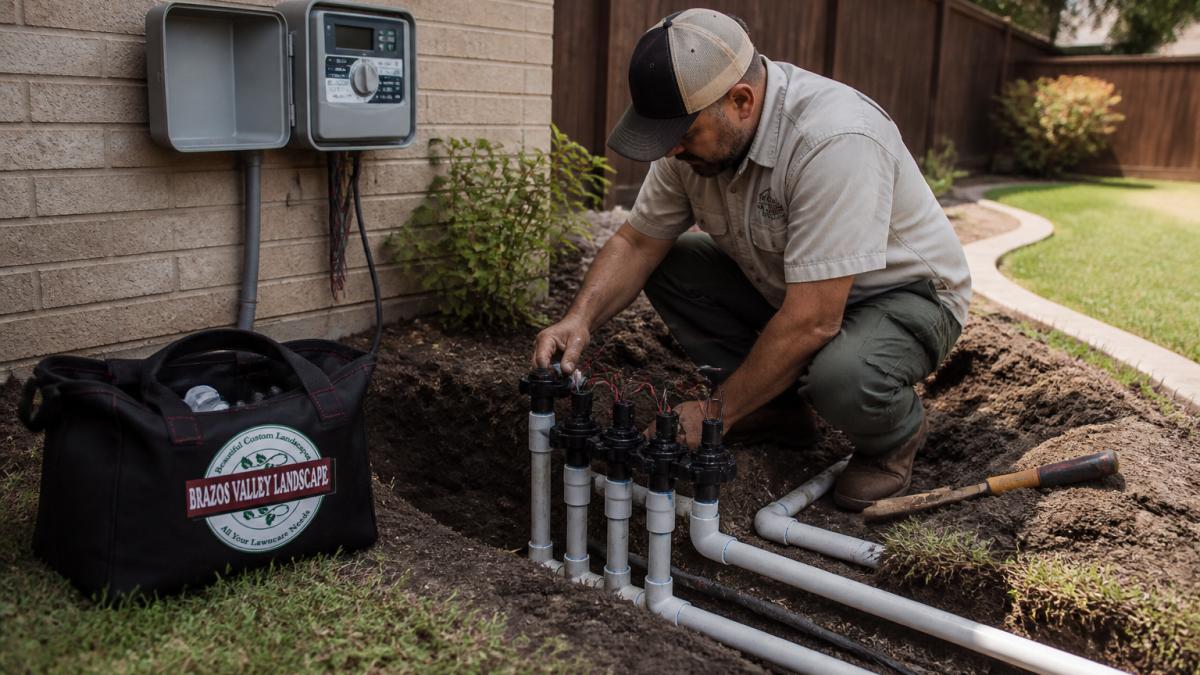
The price you see on a bid is a total, but the number that matters is what sits underneath it. Professional irrigation system installation cost is the sum of materials, labor, equipment, permits, and site work, and understanding each line is the only way to tell a fair quote from a padded one. At Brazos Valley Landscape, Inc., we build itemized estimates for every property because a lump sum hides mistakes.
Here is what a legitimate estimate should break out:
- Design and layout: zone planning, head placement, and coverage mapping
- Backflow prevention: required in most municipalities to protect the potable water supply
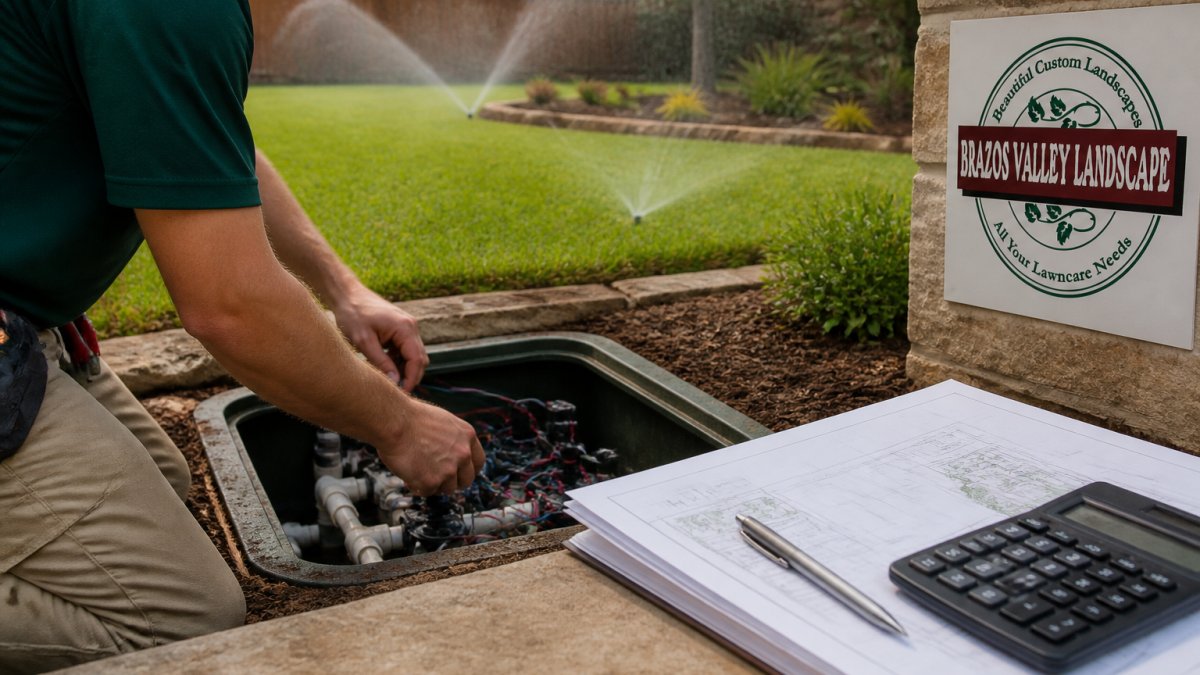
- Materials: pipe, fittings, valves, controller, sprinkler heads, and drip line
- Labor: trenching, assembly, pressure testing, and programming
- Site work: utility locating, permits, and restoration of lawn and beds
Missing any of these from a quote is a red flag, not a discount.
Irrigation System Cost per Square Foot: What Area Really Changes
There is no universal per-square-foot rate, and any contractor who quotes one before walking the property is guessing. Area matters because it drives zone count, head count, and pipe runs, but shape and soil matter just as much. A compact quarter-acre lawn may cost less to irrigate than a long, narrow lot of the same size.
What a per-area number is actually useful for is sanity-checking a bid, not pricing a job. Use that to flag outliers, then insist on a zone-by-zone breakdown before you sign.
Yard Size and Property Layout
Larger properties need more zones, which means more valves, more wire, and a bigger controller. Long runs of pipe increase both material and trenching labor. Narrow side yards, slopes, and curved beds force tighter head spacing and more fittings.
A practical way to translate area into cost is to estimate zones first. A typical residential zone covers roughly 800 to 1,200 square feet of turf, depending on head type, pressure, and soil. From there:
- Zone count drives valve count, wire runs, and controller station count.
- Head count per zone drives material cost and labor time.
- Pipe linear feet drives both material and trenching labor.
- Trenching method (machine vs. hand) drives the largest labor swing on rocky or tight lots.
A 5,000-square-foot lawn might need four to six zones; a 10,000-square-foot lawn might need eight to twelve. Each additional zone adds a valve, a wire run, and controller capacity, so the marginal cost per zone is often more predictive than the average cost per square foot.
Landscaping Complexity and Site Preparation
Established trees, mature hedges, and hardscape edges slow a crew down. Rocky soil, clay that holds water, and grading problems add excavation time. Site preparation, including marking utilities and protecting existing plantings, is real work that belongs in the estimate.
Complexity shows up in the quote as:
- Hand trenching near roots, foundations, and hardscape, which is slower than machine trenching.
- Sleeving under walks and drives, which adds material and labor.
- Soil amendments and drainage corrections where grading sends water the wrong way.
- Restoration of turf, mulch, and plantings disturbed by trenching.
Drip Irrigation Installation Cost vs. Sprinkler Systems
Drip irrigation installation cost usually runs lower than a full sprinkler system on the same beds, because drip uses less pipe, fewer heads, and shallower trenching. The trade-off is coverage: drip waters beds and containers, not open lawn.
The comparison gets more useful when you break each system into the same cost lines a contractor should quote:
| Cost Line | Spray Heads | Rotors | Drip | Smart / Weather-Based Control |
|---|---|---|---|---|
| Pipe and fittings | Moderate | Moderate | Low on beds | Same as base system |
| Heads / emitters | Highest count | Lower count | Lowest count | Same as base system |
| Valves and wire | Per zone | Per zone | Per zone | Per zone, plus sensor wire |
| Trenching | Standard depth | Standard depth | Shallower | Same as base system |
| Controller | Basic | Basic | Basic | Higher unit cost |
| Water use | Highest | Moderate | Lowest on beds | Lowest overall |
When Each System Changes the Total Price
- Spray heads are the lowest material cost per head but the highest head count, so they suit small, flat lawns where coverage is easy.
- Rotors cost more per head but cover more area per head, which can lower total head count on large turf and reduce fittings and labor.
- Drip lowers material and trenching cost on beds but adds filtration and pressure regulation at the valve, which offsets some of the savings.
- Smart or weather-based controllers raise the controller line item but reduce long-term water use and simplify seasonal adjustments.
Most residential properties need a combination. Turf gets rotors or spray heads; planting beds get drip. A contractor who quotes only one system type for an entire yard is not designing, they are selling.
How System Choice Shows Up in an Itemized Quote
When you compare bids, check that each one names the system type per zone and prices the supporting hardware:
- Drip zones should list filter, pressure regulator, and emitter spacing.
- Rotor zones should list nozzle size and arc adjustment.
- Spray zones should list matched precipitation nozzles.
- Smart controllers should list the model, sensor type, and programming included at startup.
WaterSense-labeled irrigation controllers and products
What a Professional Sprinkler Installation Estimate Should Itemize
A professional sprinkler installation estimate should list every material, every labor task, and every permit by name, with quantities. If the quote is a single number on a business card, ask for a written breakdown before signing anything.
The itemized quote should include:
- Zone-by-zone head counts and model numbers
- Pipe size, type, and total linear feet
- Controller brand and station count
- Valve type and location
- Backflow device and testing fee
- Trenching depth and method
- Permit cost and who pulls it
- Restoration scope, including sod and mulch
Permits, Utility Locating, and Site Restoration
Most municipalities require a permit for a new irrigation connection, and nearly all require backflow testing by a certified tester. Utility locating is mandatory before any trenching begins; call 811 and wait for markings. Site restoration, from reseeding bare strips to resetting sod, is the line item homeowners forget to check.
DIY vs. Professional Sprinkler System Installation
DIY vs. professional sprinkler system installation comes down to risk, not just money. A homeowner can buy components and dig trenches, but design errors, undersized pipe, and missed backflow requirements surface months later as dry spots or failed inspections.
Weigh the trade-offs honestly:
- DIY strengths: lower upfront cash outlay, control over schedule
- DIY risks: poor zone design, no warranty, permit and inspection exposure
- Professional strengths: engineered coverage, tested backflow, workmanship warranty
- Professional costs: higher upfront price, scheduled installation window
A common mistake is sizing pipe for the pump rather than the zone demand. The system runs, the far heads barely pop, and the fix means re-trenching.
Ongoing Ownership Costs and Water Efficiency
Ownership costs include seasonal controller adjustments, head replacement after mower strikes, winterization where freezing occurs, and occasional valve repairs. Water-efficient designs, including matched precipitation heads and drip on beds, reduce long-term water use and even out pressure across zones.
How to Evaluate Bids and Compare Professional Irrigation System Installation Cost
Comparing professional irrigation system installation cost across bids only works when the bids describe the same scope. Line up three quotes side by side and check that each includes design, permits, backflow, materials by brand, labor, and restoration. Ask each contractor for their warranty terms in writing, how long they have installed systems in the area, and whether they service what they install.
Use this checklist when reviewing any bid:
- Written, itemized scope with quantities
- Permit and backflow testing included
- Utility locating confirmed before trenching
- Controller and head brands named
- Zone map provided at completion
- Workmanship warranty stated in writing
- Restoration of lawn and beds included
- Service and adjustment policy after install
The lowest bid is rarely the cheapest once change orders and repairs land. Compare scope, not just totals.
Frequently Asked Questions
How much does a professional irrigation system installation cost for an average-sized yard?
There is no single number because professional irrigation system installation cost depends on square footage, zone count, equipment grade, and site conditions. A compact, simple lawn with fewer zones sits at the low end; a quarter-acre yard with slopes, mature trees, and separate garden beds sits higher. Rather than quoting a flat figure, a contractor should measure your property, count zones, and itemize materials, labor, permits, and restoration. Request an on-site written estimate so the price reflects your actual layout instead of a national average.
Is drip irrigation cheaper to install than a sprinkler system?
Drip irrigation installation cost is often lower for garden beds, foundation plantings, and narrow planting strips because it uses less trenching and fewer sprinkler heads. For a full lawn, drip is usually not the right fit and can cost more than rotors or spray heads. The honest answer depends on what you are watering: drip wins on beds and planters, sprinklers win on turf. A professional estimate should break out both options by zone so you can compare the real numbers for your property.
What should a professional sprinkler installation estimate include?
A complete professional sprinkler installation estimate should list the controller model, valve count, head types (rotors, spray heads, or drip), pipe sizes, backflow prevention, trenching and excavation, permits, utility locating, and site restoration such as sod and mulch replacement. It should also state zone count, water pressure assumptions, and the warranty terms for parts and labor. If a bid is a single lump sum with no breakdown, ask for an itemized version before signing.
Can I install a sprinkler system myself, and what does DIY save?
DIY vs. professional sprinkler system installation comes down to time, tools, and risk. A homeowner can trench, glue pipe, and wire valves, but mistakes in zone design, pressure matching, and backflow protection can cost more to fix than the labor saved. DIY also usually means no warranty on the design and no help if a line fails. If you enjoy the work and have a simple, flat yard, DIY is possible; for complex layouts or commercial property, professional installation is the safer path.
A properly installed irrigation system protects your landscape through dry spells and adds lasting value to the property. Brazos Valley Landscape, Inc. designs and installs custom irrigation and drainage solutions for homes and businesses, backed by professional landscape design, hardscaping, and outdoor living construction. Get a written, itemized estimate from Brazos Valley Landscape, Inc. and know exactly what your system will include before the first trench is dug.