
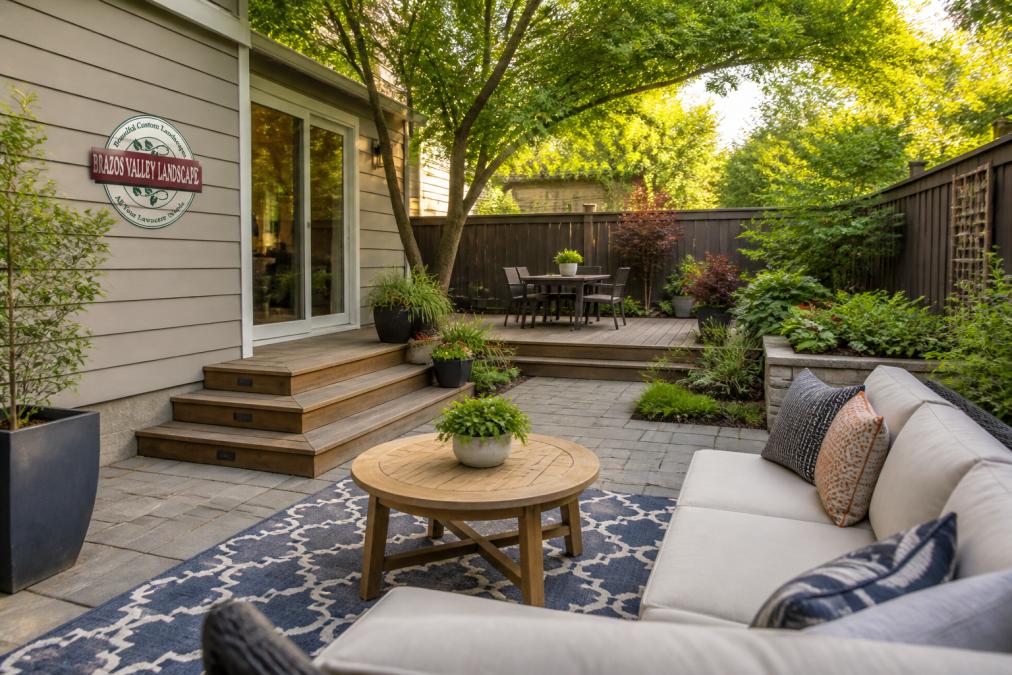
 how-to
Landscape Design for Small Backyards in 2026
Table of Contents
- Start with a Base Map and Sun Audit
- Small Backyard Hardscaping Ideas That Add Function
- Balance Hardscape and Softscape for a Cohesive Look
- Use Lighting and Mirrors to Create Depth
- How to Increase Home Value with Landscaping
- The Cost of Professional Landscape Design and Budget Tiers
- Climate-Specific Plant Palettes and Maintenance
- Common Mistakes to Avoid in Small Backyard Landscape Design
- Frequently Asked Questions
Last Updated: September 20, 2026
Start with a Base Map and Sun Audit
Landscape design for small backyards starts with measurement, not shopping: map your space and track sunlight before buying anything.
- Property lines and fence height
- Doors, windows, and utility meters
- Downspouts and drainage paths
- Existing trees and their canopy spread
- Hose bibs and outdoor outlets
Small Backyard Hardscaping Ideas That Add Function
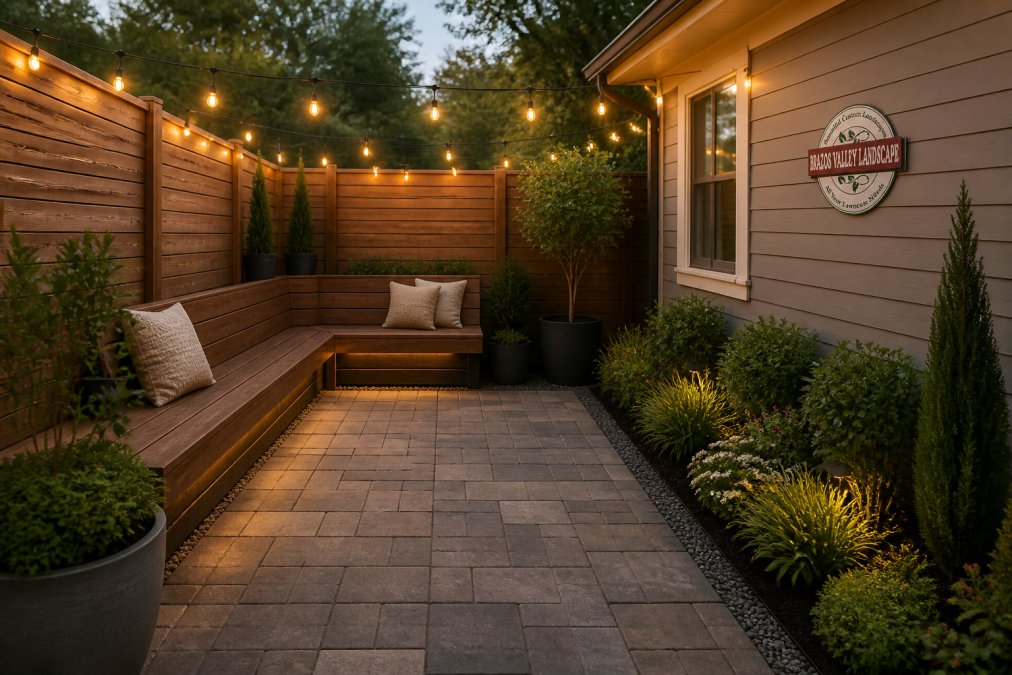
Small backyard hardscaping ideas work best when every surface does double duty. A patio becomes seating, storage, and a traffic path all at once.
Patios, Pavers, and Multi-Functional Furniture
Choose pavers that match your home's exterior; a clashing patio makes the whole yard feel unfinished.
For tight spaces, consider these options:
- Built-in benches with storage underneath
- Fold-down tables attached to fences
- Nesting side tables that stack when not in use
- Modular seating you can rearrange for gatherings
Vertical Gardening and Privacy Screens
Vertical gardening turns fences and walls into growing space: climbing vines or stacked planters add color without stealing ground area.
- Wooden lattice with climbing plants
- Tall ornamental grasses in narrow beds
- Tiered planters on a freestanding frame
Balance Hardscape and Softscape for a Cohesive Look
A cohesive yard balances hardscape and softscape so neither dominates. Too much paving feels like a parking lot. Too many plants feels overgrown and hard to maintain.
Use these principles to tie the two together:
- Repeat one material throughout (same paver, same mulch color)
- Let planting beds soften hard edges
- Use groundcovers between pavers for a natural look
- Match your hardscape color to your home's trim or roof
Use Lighting and Mirrors to Create Depth
Depth in a small yard comes from layers, not square footage. Lighting and mirrors trick the eye into seeing more space.
Ambient lighting should come from three heights:
- Ground level (path lights, uplights at tree bases)
- Eye level (wall sconces, fence-mounted fixtures)
- Overhead (string lights, pergola lighting)
How to Increase Home Value with Landscaping
How to increase home value with landscaping comes down to curb appeal and buyer priorities. A well-designed yard signals a well-maintained home.
Curb Appeal and Buyer Priorities
Focus your budget where buyers look first:
- The path from driveway to front door
- The view from the street
- The backyard's main sightline from the house
A landscape architecture approach treats the yard as outdoor rooms, each with a purpose: entry, entertaining, play, or quiet retreat. Buyers respond to purpose more than random plantings.
The Cost of Professional Landscape Design and Budget Tiers
The cost of professional landscape design varies widely by scope, materials, and site conditions. Here's the breakdown.
Typical Cost Ranges by Project Type
These ranges reflect common residential projects in most U.S. markets; your quote shifts with access, drainage, and material choice.
| Project Type | Typical Range | What Drives the Number |
|---|---|---|
| Design-only plan (drawings, plant list, layout) | $500-$2,500 | Yard size, number of zones, revisions |
| Landscape refresh (mulch, pruning, seasonal color) | $1,500-$5,000 | Bed square footage, plant quantity |
| Partial redesign (new beds, path, lighting) | $5,000-$15,000 | Hardscape linear feet, fixture count |
| Full design-build (patio, irrigation, plantings, structures) | $15,000-$60,000+ | Patio size, retaining walls, pergola or kitchen |
Low-Cost vs. High-End Breakdown
You can hit the same design goal at two very different price points. The trade-offs:
Path or walkway
- Low-cost: Gravel or crushed stone with steel edging, roughly $3-$8 per square foot installed
- High-end: Natural stone pavers on a concrete base, roughly $20-$40 per square foot installed
Seating area
- Low-cost: Modular wood benches or a repurposed dining set, $200-$800
- High-end: Built-in masonry bench with storage and cushion, $2,500-$8,000
Vertical interest
- Low-cost: DIY trellis with annual climbers, $50-$200 in materials
- High-end: Custom steel or cedar screen with integrated planters, $1,500-$6,000
Lighting
- Low-cost: Solar path lights and string lights, $100-$400
- High-end: Low-voltage system with transformer and timer, $1,500-$5,000 installed
Plantings
- Low-cost: Seed, divisions from neighbors, and nursery end-of-season sales, $200-$600
- High-end: Specimen trees and mature shrubs installed, $3,000-$15,000
What Actually Moves the Quote
Four line items often drive most of the variance in landscape project costs: drainage and grading, retaining walls, irrigation, and structures like pergolas or outdoor kitchens.
DIY vs. Professional: Where the Line Sits
Some tasks pay off as DIY. Others do not.
- DIY-friendly: Mulching, planting, container arrangements, string lighting, painting or staining a fence, laying gravel paths.
- Hire out: Grading and drainage, retaining walls over 3 feet, irrigation hookups, electrical for lighting, masonry patios, and any structural work.
The rule most designers use: if a mistake would require tearing out finished work, pay a pro; if it's fixable in an afternoon, DIY is reasonable.
Climate-Specific Plant Palettes and Maintenance
Plant palettes should match your climate, not the nursery's best-seller list, the right palette cuts water use, reduces replacement costs, and looks better year-round. Starting points for three climates:
Hot and Dry (Drought-Tolerant Palette)
For yards in low-rainfall regions or with full-sun exposure all day, lean on plants that evolved for heat.
- Structure: Dwarf crape myrtle, Texas sage, dwarf oleander (where hardy)
- Perennials: Coneflower, black-eyed Susan, salvia, yarrow, penstemon
- Groundcover: Creeping thyme, sedum, lantana
- Grasses: Blue fescue, muhly grass, little bluestem
Shade and Partial Shade
North-facing yards and spots under mature trees need plants that tolerate low light and compete with tree roots for water.
- Structure: Japanese maple (dwarf cultivars), oakleaf hydrangea, dwarf fothergilla
- Perennials: Hosta, heuchera, astilbe, hellebore, Japanese painted fern
- Groundcover: Ajuga, sweet woodruff, creeping jenny
- Grasses: Japanese forest grass, sedge
Cold Winter Climates
If your yard sees hard freezes, prioritize plants that hold structure through winter and bounce back in spring.
- Structure: Dwarf arborvitae, boxwood, dwarf ninebark
- Perennials: Daylily, coneflower, sedum, ornamental allium
- Groundcover: Creeping phlox, hardy geranium
- Grasses: Karl Foerster grass, switchgrass
Multi-Season Interest in a Small Space
A small yard cannot afford plants that look good for three weeks and disappear. Pick for at least two seasons of interest:
- Spring bloom + fall color (e.g., dwarf fothergilla)
- Summer flower + winter structure (e.g., ornamental grasses left standing)
- Evergreen foliage + seasonal berries (e.g., certain hollies)
Maintenance Requirements by Design Style
Upkeep is where most small-yard designs succeed or fail. Match the design to the time you'll actually spend.
| Design Style | Watering | Pruning | Mulching | Seasonal Tasks |
|---|---|---|---|---|
| Native / drought-tolerant | Low (deep, infrequent) | Light, once a year | Spring top-dress | Cut back grasses in late winter |
| Formal / geometric | Moderate | Heavy, 2-3 times a year | Twice a year | Shearing hedges, edging beds |
| Cottage / mixed border | Moderate | Moderate, deadhead through season | Spring | Divide perennials every 2-3 years |
| Container-heavy | High (daily in summer) | Light | Refresh potting soil yearly | Repot, fertilize monthly in season |
A Note on Vertical Gardens and Water Features
Two design features add maintenance most articles skip:
- Vertical gardens: Living walls need irrigation lines run to each tier and monthly checks for clogged emitters. Without that, plants dry out unevenly and the wall looks patchy within a season.
- Water features: Even a small fountain needs weekly debris removal, seasonal pump cleaning, and, in cold climates, winterization. Budget 30-60 minutes a week during the active season.
If neither fits your schedule, a dry creek bed or sculptural element gives similar visual interest with almost no upkeep.
Common Mistakes to Avoid in Small Backyard Landscape Design
The biggest mistakes in small yard design come from ignoring scale and maintenance:
- Planting without checking mature size (a shrub that hits 8 feet swallows a small bed)
- Skipping drainage fixes before hardscape (water pools under new patios)
- Choosing high-maintenance plants for low-maintenance lifestyles
- Blocking the visual axis with tall plants right at the main view
- Overlooking irrigation until plants are already stressed
Frequently Asked Questions
How do I landscape a very small backyard?
Start with a scaled base map and sun audit, then zone the space for outdoor dining, vertical gardening, and a focal point. Use multi-functional furniture and raised beds to maximize square footage. Choose region-appropriate plants like dwarf trees and perennials for multi-season interest. Keep hardscape and softscape balanced, and add ambient lighting to make the area feel larger. A professional designer can help you avoid costly layout mistakes.
What is the rule of 3 in landscaping?
The rule of 3 groups plants or design elements in odd numbers, which the eye finds more natural. In small backyard landscaping, plant three dwarf trees or three container arrangements at varying heights. This creates rhythm and avoids the stiff look of even-numbered groupings. Apply it to hardscape features too, like three steps or three lighting fixtures, to guide movement and add visual interest without clutter.
What is the cheapest way to landscape a backyard?
Focus on DIY tasks: define beds with edging, amend soil, and plant drought-tolerant perennials or groundcovers. Use gravel or mulch instead of full hardscaping, and repurpose containers for raised beds. For structural work like drainage or patios, hire a pro. The cost of professional landscape design varies by scope, so request a quote for your project to understand the investment. This can help keep upfront costs manageable.
What are the best plants for small backyard landscaping?
Choose dwarf trees, perennials, and groundcovers suited to your region and sun exposure. In the Brazos Valley, drought-tolerant natives like lantana and salvia work well in full sun, while shade-loving ferns and hostas fill north-facing beds. Add multi-season interest with spring bulbs and fall grasses. Keep scale in mind: avoid aggressive spreaders and pick varieties that stay compact. A local nursery or landscape pro can confirm what thrives in your soil.