 blog
blog
Best Landscape Contractor in Bryan: 2026 Guide
Table of Contents
- What Separates the Best Landscape Contractor in Bryan From the Rest
- Hiring a Landscape Contractor Checklist: 12 Questions to Ask Before You Sign
- Landscape Design Cost Estimate: What Drives Your Project Budget
- Outdoor Kitchen Installation Contractors: What to Expect From Start to Finish
- Drainage Solutions, Hardscaping, and Irrigation: Services a Full-Service Landscape Contractor Should Handle
- Residential vs Commercial Landscaping: How the Best Contractor in Bryan Adapts
- Frequently Asked Questions
Last Updated: September 25, 2026
What Separates the Best Landscape Contractor in Bryan From the Rest
Three signals separate the professionals from the rest:
- A written estimate with line items, not a single lump sum
- A named point of contact for the duration of the project
- A clear change-order process for when plans shift mid-build
That's the theory. Here's where it breaks down in practice.
Hiring a Landscape Contractor Checklist: 12 Questions to Ask Before You Sign
A hiring a landscape contractor checklist turns a vague gut feeling into a documented decision. Print it. Bring it to every consultation. The contractors worth hiring will welcome the questions.
Ask these twelve before you sign anything:
- Are you licensed and insured, and can I see the certificates?
- Who is my day-to-day contact during the build?
- What does the written scope include, and what's excluded?
- How do you handle change orders and unexpected costs?
- What's the payment schedule, and how much is due upfront?
- How long will the project take, and what could delay it?
- Do you handle permits, or do I?
- Who handles drainage and grading issues discovered mid-project?
- What's your warranty on plants, hardscape, and labor?
- Can I see two or three recent projects in person?
- How do you communicate progress, and how often?
- What happens if we disagree about the finished work?
Landscape Design Cost Estimate: What Drives Your Project Budget
A landscape design cost estimate is driven by four variables: square footage, material grade, site access, and how much existing work has to come out first. Get those four numbers straight and the rest of the budget follows.
What moves the needle most:
- Scope size. A small courtyard and a full backyard build are different animals.
- Materials. Natural stone costs more than manufactured pavers; both have their place.
- Site conditions. Slopes, rocky soil, and tight access all add labor hours.
- Utilities and drainage. Rerouting irrigation or fixing a grading problem adds cost fast.
- Features. An outdoor kitchen or fire feature pushes a project into a different tier.
How to Build a Realistic Budget Before You Get a Quote
Most homeowners come to a consultation with a single number in their head and no idea what it buys. A more useful approach is to budget by tier. Think of your project in three bands:
- Refresh band. Cleanup, mulch, seasonal color, minor plant replacement, and small repairs. This is maintenance-level spending and is usually the lowest-cost tier.
- Upgrade band. New planting beds, a walkway or small patio, irrigation repairs, and lighting. This is where most single-area projects land.
- Build band. Full design and installation, retaining walls, drainage systems, outdoor kitchens, and pools. This tier carries the longest timelines and the most permitting.
A Maintenance Cost Estimator You Can Actually Use
Ongoing care is the number most homeowners forget to budget. A simple way to estimate it is to separate your property into three cost pools:
- Routine lawn care. Mowing, edging, trimming, and blowing on a recurring schedule. This is your most predictable, recurring expense and scales directly with lot size and how often you want service.
- Seasonal services. Spring and fall cleanups, fertilization, aeration, mulching, and leaf removal. These hit a few times a year rather than monthly.
- Repair and replacement. Irrigation heads, valves, controllers, dead plants, and hardscape fixes. Budget a contingency for this rather than treating it as a surprise.
What to Ask For in a Written Proposal
Because pricing depends on your specific site, dates, and material selections, the honest answer is that no two projects quote the same. Brazos Valley Landscape, Inc. provides written, cost-effective proposals after a site walk, so you're comparing real numbers instead of guesses. According to guidance from the U.S. Federal Trade Commission on home improvement contracts, you should always get the full price, payment schedule, and cancellation terms in writing before work begins.
- A line-item breakdown by trade (design, hardscape, irrigation, plantings, lighting)
- A materials list with grades and brands specified
- A payment schedule tied to milestones, not calendar dates
- A written change-order process with how costs are approved
- A warranty statement covering plants, hardscape, and labor separately
| Project Element | What Drives Cost | Planning Note |
|---|---|---|
| Design and layout | Property size, complexity | Do this first, always |
| Hardscaping | Material grade, square footage | Biggest single line item |
| Irrigation | Zones, water source, trenching | Fix drainage first |
| Plantings | Plant size, quantity, species | Native plants cut long-term cost |
| Outdoor living | Kitchen, shade, lighting | Phase if budget is tight |
| Ongoing maintenance | Lot size, service frequency | Budget separately from install |
Outdoor Kitchen Installation Contractors: What to Expect From Start to Finish
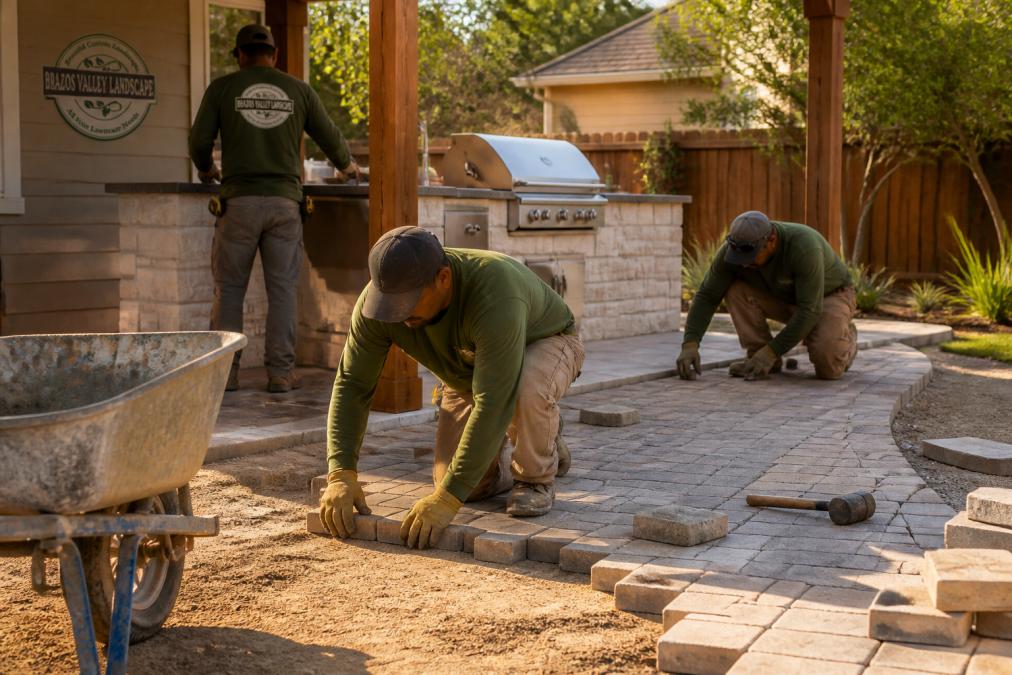
Outdoor kitchen installation contractors follow a sequence: design, permits, utility rough-in, masonry or framing, appliance fit, and finish work. Skipping the utility planning stage is the single biggest cause of blown budgets and torn-out work.
A typical build moves through these phases:
- Design and material selection. Layout, countertops, appliances, and finishes get locked.
- Permits and HOA approval. Gas, electrical, and structural work usually need sign-off.
- Utility rough-in. Gas lines, electrical, and water are run and inspected.
- Structure and masonry. The frame, counters, and surround are built.
- Appliance installation. Grills, refrigerators, and sinks are set and connected.
- Finishing and inspection. Final touches, cleanup, and a walkthrough.
Drainage Solutions, Hardscaping, and Irrigation: Services a Full-Service Landscape Contractor Should Handle
A full-service landscape contractor should handle drainage solutions, hardscaping, and irrigation under one roof. Splitting those three across separate crews is how you end up with a beautiful patio that floods every spring.
The services to look for:
- Drainage solutions: French drains, grading, swales, and downspout routing
- Hardscaping: paver installation, retaining walls, walkways, and patios
- Irrigation installation: zone design, drip systems, and smart controllers
- Soil preparation: grading, amendment, and compaction done correctly
- Landscape lighting: low-voltage systems integrated with hardscape
Residential vs Commercial Landscaping: How the Best Contractor in Bryan Adapts
Residential and commercial landscaping follow different rules. Residential projects prioritize curb appeal and personal use. Commercial projects prioritize durability, safety, and appearance standards that hold up under heavy traffic.
For commercial property managers, the priorities shift:
- Consistency. The property has to look maintained every single week.
- Liability. Trip hazards, dead limbs, and irrigation leaks are real risks.
- Budget predictability. Commercial landscape maintenance plans are usually contracted annually.
- Curb appeal at scale. Entrances, signage beds, and parking islands get priority.
Climate-Specific Plant Selection for Local Soil and Heat
This is the part most generic guides skip, and it's the part that determines whether your landscape thrives or dies by August. The local growing environment features hot, humid summers, periodic drought, and heavy clay soils that drain slowly and compact easily. Plant choices that work in cooler or sandier regions often fail here.
What that means in practice:
- Match plants to clay, not to a catalog. Species that tolerate periodic wet feet and heavy soil outperform those that demand sharp drainage.
- Favor regionally adapted and native species. Native and adapted plants evolved for local heat and rainfall cycles, so they need less coddling, less water, and fewer chemical inputs once established.
- Respect the sun. Full-sun exposures on the south and west sides of a property punish tender plants. Choose heat-tolerant species for those zones and save the delicate selections for shaded beds.
- Plant in the right season. Fall and early spring establishment gives roots time to settle before summer stress.
- Amend, don't just dig. Clay soils benefit from organic amendment and proper planting depth. Planting too deep is one of the most common causes of tree and shrub failure.
Water Conservation and Xeriscaping
Water is the single biggest long-term cost and risk in a local landscape, and it's the topic most competitors barely mention. Xeriscaping is not rocks and gravel, it's a design approach that reduces or eliminates supplemental irrigation by matching plants to the climate and grouping them by water need.
The core principles:
- Hydrozoning. Group plants with similar water needs on the same irrigation zone so you're not overwatering the drought-tolerant plants to keep the thirsty ones alive.
- Drought-tolerant plant palettes. Regionally adapted shrubs, ornamental grasses, and perennials that look intentional and full without constant watering.
- Efficient irrigation. Drip lines, properly spaced heads, and smart controllers that adjust to weather rather than running on a fixed clock.
- Soil improvement. Healthy, amended soil holds moisture longer and reduces how often you have to water.
- Mulch. A proper mulch layer reduces evaporation and suppresses weeds, which compete for the same water.
Why This Matters for Both Property Types
For a homeowner, climate-matched planting and water conservation mean a landscape that looks good in the worst heat of the year without a spike in the water bill. For a commercial manager, it means predictable appearance, lower irrigation repair frequency, and fewer plant replacements. In both cases, the contractor who designs for the local climate and soil, rather than importing a generic plan, delivers a landscape that costs less to own over its lifetime.
Frequently Asked Questions
How much does a landscape contractor usually charge per hour?
Hourly rates vary based on the scope of work, crew size, and materials involved. Most landscape contractors price projects as a whole rather than by the hour, since design, installation, and hardscaping each carry different labor and material costs. For an accurate landscape design cost estimate, request a written proposal that breaks down labor, materials, and any equipment rental. Brazos Valley Landscape, Inc. provides free consultations and detailed quotes so you know exactly what your project involves before committing.
What should I look for when hiring a landscape contractor for a backyard renovation?
Start with licensing, insurance, and a physical business address. Ask for references from projects similar to yours, and check that the contractor handles design, permitting, and installation in-house rather than subcontracting everything. A solid hiring a landscape contractor checklist includes verifying workers compensation coverage, confirming a written timeline, and reviewing warranty terms. The best landscape contractor in Bryan will welcome these questions and provide documentation without hesitation.
Is it better to hire a landscape architect or a landscape contractor?
A landscape architect focuses on design and engineering, while a landscape contractor handles both design and construction. For most residential projects in Bryan, a full-service landscape contractor is the more practical choice because they manage the entire process from concept to completion. If your project involves structural work, grading, or complex drainage solutions, confirm the contractor has experience with those elements or partners with a licensed engineer.
What is the typical timeline for a custom outdoor living project?
Timelines depend on project complexity, material availability, and weather. A simple patio or planting bed may take one to two weeks, while outdoor kitchen installation contractors often need four to eight weeks for full builds with plumbing, electrical, and masonry work. Ask your contractor for a written schedule with milestones and a clear communication plan. A reliable contractor will provide weekly updates so you are never left guessing about progress.